
More Human Than… Blade Runner 2049

br 2049

Let’s get this out of the way first: Blade Runner 2049 has not resulted in the kind of film I feared it would be when I first heard that this belated sequel would happen and thought: “That has to be the worst idea in the history of bad ideas.”

Quite the opposite, in fact. Director Denis Villeneuve, screenwriters Hampton Fancher (also partly responsible for the original) & Michael Green, executive producer Ridley Scott and their crew have offered up one of the most powerful science fiction films of the new millennium. It’s been a long time, in fact, since we’ve been given a cinematic experience as pure as this.

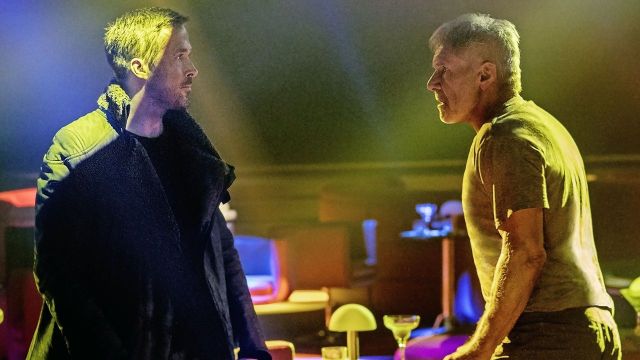
Set 30 years after Scott’s classic, the sequel sees a mystery set in place when Ryan Gosling’s Blade Runner retires a Replicant-in-hiding who has been guarding a secret which could change the course of the world forever.

From just that plot description it’s clear this is no mere retread of the first movie, which had a fairly contained hunter versus hunted narrative.

Villeneuve and company paint on a much broader canvas, and this time the questions seem to revolve around not what it is to be human, but what it is to be more than human. It has an utterly palpable mood of tense gloom, giving you the constant feeling that something big and awful is about to happen, but it does this by widening the scope of Scott’s world, which is quite an act to pull off.

The music (by Hans Zimmer and Benjamin Wallfisch, with plenty of nods to Vangelis) is bold and wonderful, the sound design by Theo Green and Mark Mangini is overwhelming and the cinematography by the cinematic god that is Roger Deakins is dazzling and beautiful, all of which work together to produce something that absolutely demands to be seen on the big screen. As big a screen as possible.

Gosling is great in the lead (as ‘K’), and while it’s a little difficult to go into depth on his role while avoiding spoilers, he finds just the right balance of what must have been a tricky character to get right. The rest of the cast is filled out by superb actors who know how to make the best of smaller roles, but the film really belongs to Gosling and, of course, Harrison Ford.

Ford returns as Blade Runner, Deckard, and I honestly can’t recall when I last saw him so fully engaged and fully immersed in a role. He is magnificent, Deakins’ camera loving every deep crag and crevice on his sandblasted face, and is a full-on the movie star of the old guard. I hope this is the beginning of a renaissance for the actor, because I’ve missed seeing him do great work onscreen.

There is a slight thorn in this rose, however. An unfortunate element that stands out is that the future as presented here is very much patriarchal: street-walkers roam in packs, artificial women are everywhere, as companions and toys for men, their sole aim to pleasure. And there’s a great deal of violence towards women (four female characters are brutally murdered). This troublesome theme pushes to the forefront of the story with Jared Leto’s Wallace, as he casually kills one of the synthetics his company has just given birth to. It’s a (deliberately) horrific scene, and I’m still trying to decide whether this is a deliberate part of the texturing, a barbed comment on misogyny in society and even if so, whether it was a necessary choice for the film. I’m not so sure.

I love the original with a vengeance, and while I’m glad they didn’t attempt to replicate (…sorry…) that film, what results is a somewhat colder effort than Scott’s remarkable and enduring tone poem, and only time will tell whether this will similarly work its way into my affections.

It’s rather like hearing  a new track by Led Zeppelin, riffing on one of your favourite Beatles songs, you know you’re getting something astonishing but you’re not sure if you’ll grow to love it.

However, against all the odds, Blade Runner 2049 is a towering achievement, a smart, powerful juggernaut of a movie which ultimately suggests something akin to hope for mankind. In an era of cookie cutter sequels that we’ve been given a sequel to a great movie that forges it’s own unique path is close to a miracle, which means that, much like the original, it’s a film which comments on its own premise (you’ll need to see the film to fully understand that).

Movies like this don’t come along too often and when they do we should celebrate them. Go to a cinema and experience it.
 

It’s Star Trek, Jim, But Not As We Know It – Discovery Arrives

discovery logo

Star Trek: Discovery finally arrives, after troubling tales of behind the scenes problems and somewhat less-than-thrilling trailers, and I suppose the first question to ask is whether it’s the disaster many were expecting?

Happily the answer is no. The first two episodes, which dropped yesterday on CBS and the network’s CBS All Access subscription service in the U.S.A. and on Netflix almost everywhere else today, are generally exciting and well-told, with high production values and a decent cast. However, at least with the evidence at hand, it does veer away from creator Gene Roddenberry’s hopeful spirit of exploration, and this may be an issue for some.

Taking place some ten years or so before the original series’ tales of Captain Kirk and co (a point I’ll come back to later), Discovery features as its focus not the traditional Starfleet Captain (though there is one, played by Michelle Yeoh) but instead on the first officer of the USS ShenzhouMichael Burnham, as portrayed by Sonequa Martin-Green.

Burnham’s parents were killed by Klingons, which resulted in her being raised by Spock’s father, Sarek, on the planet Vulcan. This becomes important in the opening episode when Burnham’s ship is the first to engage in a direct encounter with the Klingons in almost one hundred years. Needless to say, the encounter quickly goes pear-shaped and we’re treated to a pretty epic space battle, alongside some interesting twists and turns for the characters (particularly in the second episode).

Michelle Yeoh is good value, and thankfully brings more humour and emotion to her role than the stilted trailers led us to believe, Science Officer Saru, played under heavy prosthetics by the always welcome Doug Jones, is also immediately likeable. Without these two the show would definitely have been lacking the human touch, as the rest of the crew singularly fail to register anything beyond dark-haired man, red-haired woman and grizzled admiral who only appears as a hologram, etc.

Viewers should be advised there’s also a lot of Klingon grousing about purity of race and what a rum lot we humans are. With subtitles. Of course, looking at the state of the world right now, it’s difficult to disagree with their summation of mankind. Let’s hope the show gives us enough of an opposing viewpoint to feel better about ourselves as it goes on.

Jason Issacs, another actor I usually enjoy, didn’t make an appearance in the first two episodes, so we have that treat to look forward to.

My biggest problem with Discovery was with Martin-Green, who faces the tricky problem of engaging us with a human raised by the emotion-subsuming Vulcans. It’s a delicate balance pulled off marvellously over the years by the late, great Leonard Nimoy, but across the first two episodes I found that balance to be weighted in favour of some stiff-sounding line readings and an inability to connect with the character.

Martin-Green faces a difficult task, especially being the viewer’s eyes through these shenanigans, but the cliff-hanging climax to the second episode at least suggests she’ll be getting a promising arc as we move forward. Of course, some better dialogue might help too. *cough*

My second big issue comes with the show’s setting. As mentioned above, we’re rolling around a decade before Kirk and co, but everything here looks WAY more advanced than the original series. Again, this was always going to be a tough nut to crack: you either embrace the 1960s-produced vibe of the original series or you say “Screw it, no one will buy that in the age of shiny CGI” and go for a modern design ethic. The producers of Discovery have chosen the latter.

Is this a geek-only problem? Will more casual viewers give a hoot that it looks more like the new timeline-set, JJ Abrams movies (particularly in its annoying overuse of lens flare) than a prequel show? Casual viewers may not care but this decision is baffling when so much of Discovery’s Klingon Cold War setting relies on understanding its place in Star Trek’s chronology. If nothing else it smacks of indecision at best, and downright carelessness at worst. The large number of producers and executive producers listed in Discovery’s opening credit sequence may suggest an answer to this…

What is for sure is that most of Roddenberry’s idealism is gone, as Discovery has more in common with a Game of Thrones viewpoint that humans suck and war is hell than it does with discovering Tribbles and dallying with green-skinned dancing girls, while it rams home analogies about fundamentalism with all the subtlety of a Klingon punch to the face.

Finally then, Discovery shows some promise in its set-up, but it’s likely to tick-off many long-term Star Trek fans. Personally, we have endless hours of Star Trek in its various forms before this, so I’m happy enough to see the franchise try something different. However, it’s so mired in Star Trek history (while simultaneously contradicting it left, right and centre) that I’m not certain how much it will appeal to Trekkies or non-Trekkies. Which could be something of a problem.

Whether or not that different feel is enough to sustain my interest in the long run remains to be seen, or to bring in those obviously much-hoped for casual viewers, but I’m certainly intrigued enough to see what this… sorry to use the word, but… grittier take on the final frontier has to offer. I had fun for its duration, and there’s something to be said for that, plus it’s good to see Star Trek back on television, its spiritual home.

Beam me up, at least for now…

Valerian – The Flawed Jewel

Valerian-and-the-City-of-a-Thousand-Planets

I didn’t know exactly what Luc Besson would be giving us with his big budget adaptation of the Valerian and Laureline comic books, but a sci-fi film with a pro-EU message definitely came as a surprise.

Besson first seriously considered adapting Jean-Claude Mézières and Pierre Christin’s long-running comic book series while he was making The Fifth Element. The decision to hold off until special effects caught up with the imagination needed to fully realise the characters and the universe they inhabit was probably a wise one, and it has paid off handsomely.

Valerian and the City of a Thousand Planets literally screams out to be experienced at the cinema, preferably on as big a screen as possible – and in 3D if your local theatre understands how to properly project that format. It is without a doubt one of the most visually luxuriant films you’ll see this year (and possibly many other years), and is a thing of pure, unadulterated beauty.

Besson’s film takes no prisoners, and with little pre-amble launches us into a fully-formed world (or rather, universe) and expects us to embrace the story in progress. It’s an exhilirating rush and one which might leave some viewers who expect to be spoon-fed information a little disoriented (don’t worry, there’ll be another Transformers film for them soon, I’m sure). Valerian is a Luc Besson joint, full of the off-centre tics expected from his work, and is draped in his wonderful Gallic sensibility like a well-cut designer outfit.

It’s decidely not a Hollywood cookie cutter film, instead it’s madly ambitious and joyfully exhuberant though I didn’t feel quite the same eccentric voice as The Fifth Element was being given full reign. Perhaps this film’s astonishing budget led to more pressure on Besson.

Even if this was the case, Besson has mangaged to present us with something wonderous and completely topical, because snuck in between all the talk of extra-dimensional shoppng centres, converters and space pearls is a message that seems to focus on the importance of unity between different races. And with much of the action taking place on Alpha, a space station where millions of creatures from different planets live peacefully and exchange their knowledge and cultures, it’s not too much of a stretch to imagine the current situation between the UK and the EU seeping through into the fabric of this production. It’s quite a thing to see but with its core message of space unity, Besson has seemingly given us the first “we’re better together, despite the problems”, anti-Brexit, sci-fi fantasy.

Cara Delevingne makes for a fetching and spiky Laureline, the camera loves her and the character is pretty much elevated to the lead role (something which might irritate comic book purists, but fuck them because it works), another quality which sees the film stand out from the crowd. Indeed the film might better be titled Laureline and the City of a Thousand Planets, which does lead me to the one big issue I had with Besson’s choices.

Dane DeHaan is a fine actor, but he has a dark, somewhat surly quality which I didn’t feel was right for this role. While there was certainly no need to have Valerian as a wisecracking, Peter Quill/Starlord clone, the chemistry with Delevingne feels somewhat unbalanced at times, and a lighter touch was needed to stop Valerian coming across as something of a creep towards his partner. While this moves their interplay away from cliche, it also undercuts vital empathy and an actor with a little more screen charm would have worked wonders. It’s a shame because this central dynamic is vital to the film, and that spark could have made a big difference. I’m sure he’d disagree (hey, it’s his movie) but for me it’s a rare moment of casting weakness from Besson.

But this unusual misstep shouldn’t deter you from seeing Valerian, for despite this it’s a big, glorious attempt to give cinema something different and in an age of blue and teal colour-graded action movies that’s to be cherished and celebrated. Valerian is a jewel of a film, albeit one with an unfortunate flaw at its heart.

If nothing else, Valerian is a cult film in the making, and I can pretty much guarantee that in fifteen or twenty years time enthusiasts will be singing its praises as one of those films that everyone should have gone to see at the cinema.

Vive le Besson!

Discover The New Star Trek Trailer

Star-Trek-Discovery-Official-Trailer-YouTube

The general reaction to the first trailer for Pramount’s new Star Trek: Discovery series was probably not quite what the studio was hoping for, given it will be the flagship show of the new CBS All Access channel (at least in the U.S., thankfully Netflix have picked it up for pretty much every other territory).

This just released second trailer certainly looks a lot more spectacular, and the line readings are less stilted (though it all still seems rather po-faced for my liking, with little of the sense of fun that made the original series so enjoyable, back in 1966).

There’s also plenty to annoy hardcore Star Trek fans with what appears to be a great deal of retconning going on – considering this is a prequel series to Kirk and Spock’s adventures. Though not as much of a prequel as the oft-derided Enterprise show. Still with me on all this…!?

The show features a solid cast, including Sonequa Martin-Green, Michelle Yeoh, Chris Obi, Rainn Wilson, Doug Jones and Jason Issacs.

With a fairly troubled production history to date (including the loss of showrunner, Bryan Fuller), here’s hoping Star Trek: Discovery will find its space legs when it begins airing from September 24th.

Spielberg’s Ready Player One Trailer

READY PLAYER ONE

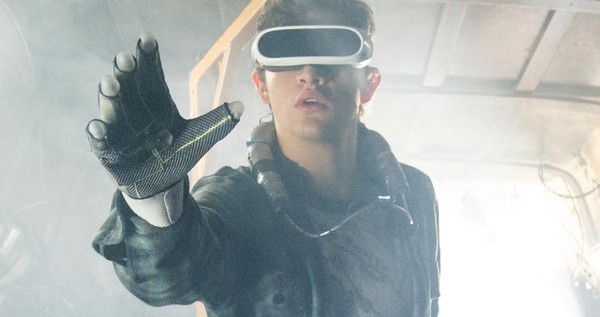
Based on the 2011 debut novel by Ernest Cline, Ready Player One is also the next film from master of cinema, Steven Spielberg. The first trailer has just dropped from the San Diego Comic-Con.

Spielberg and co say the film will be faithfull to the source material but also introduce enough fresh elements to give this its own identity.

As someone with little interest in games or gaming this should contain little to excite me, but you know, it’s Spielberg so I’m hoping to be pleasantly surprised (not least of which by that Iron Giant cameo)…

Apes Together Strong – War Continues A Great Summer

apes

Frankly, when Fox announced a (second) reboot of their beloved Planet of the Apes franchise back in 2010 it elicited little more than a resigned sigh from me. When news came that the apes would be fully realised with CGI my heart sank.

As a long-time fan of the original series of films (I saw most of them at the cinema in the early 1970s) I’d already been burned by the reboot attempted by Tim Burton a decade before this most recent announcement, in 2001. That film still arguably stands as Burton’s worst (even though it had some great design and make-up work).

Still I trudged dutifully into the cinema in 2011 to see James Franco kickstart the Rise of the Planet of the Apes and came out two hours later with a pleasantly surprised smile on my face. Rupert Wyatt’s prequel reimagining (and my fingers tremble even just typing that phrase) was a thoughful and engaging movie, and the work of the actors (including Andy Serkis) and animators meshed almost seamlessly to give us an exciting new take on the apes.

My surprise grew to actual anticipation for Matt Reeve’s Dawn of the Planet of the Apes in 2014 and I was not disappointed. The visuals improved again and we were given an even more exciting and thought-provoking story with Caeser (Serkis) doing his best not to lead his apes into war against mankind’s few survivors of the simian plague which had all but wiped them out at the close of the previous movie.

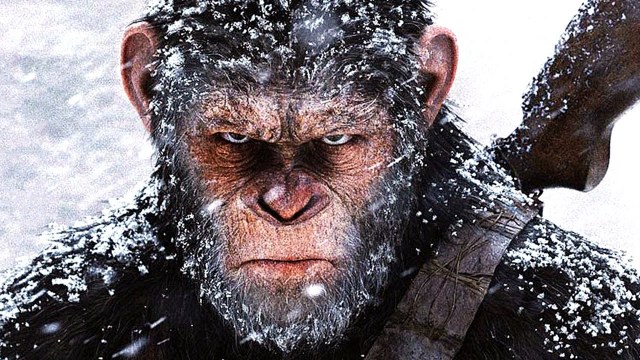
By now I was actually excited to see Matt Reeves, Andy Serkis and co. return for the third film in this respectful but fresh series of films, and I’m happy to say that War for the Planet of the Apes not only met my expectations but far exceeded them.

First a word about the ape work. The actors and animators combine talents here to give the most astonishing performances yet seen in motion capture. These apes live, breathe and feel to such a high level that it simply becomes impossible to look at them as special effects. For me, Caesar, Maurice, Rocket, “Bad Ape” (a hugely enagaging new character) and the other apes have reached a point where you feel the awards bodies should really be bringing in a new category to recognise these remarkable types of roles.

The story opens with Caesar’s clan fighting against a human military faction called Alpha-Omega. Once again Caesar attempts to take the higher ground by moving the apes to another location, one which will see them leave the worsening human aggression behind. But Alpha-Omega’s leader, a mysterious, Colonel Kurtz-like character (played with layered gusto by Woody Harrelson) soon escalates events to a very personal level, taking Caeser on a mission which will see the leader tested as never before.

War of the Planet of the Apes is constantly surprising and totally enthralling, it continues in the vein of the best of the Apes films by telling a story which is both thoughtful and exciting. It leads towards a war of almost biblical proportions, but one whose combatants are something of a surprise. As with the very best summer blockbusters, Reeves and his team give us exactly what they promise, just not in exactly the way we might expect.

Kudos also to the screenplay (by Mark Bomback and Matt Reeves), to Michael Seresin’s beautiful cinematography and also to Michael Giacchino for a truly memorable score, one that reminded me of John Barry’s work in several places. These combine to give a movie which really should be experienced at a cinema.

The film is also surprisingly emotional (I was weeping openly at the finish) and if this turns out to be the final film of a trilogy (highly unlikely, right Fox…?), then it will end as a triumph. We have been gifted with two wonderful runs of Apes movies and this latest trilogy is proof that an old idea can have new life breathed into it in the right hands.

Summer 2017 has seen a remarkable run of truly excellent movies and this might just be the best of an exceptional bunch. It’s definitely the best of the new Apes trilogy.

Godzilla: King Of The Anime

Godzilla-Monster-Planet-The-Anime-Movie-Featured-image-672x372.jpg

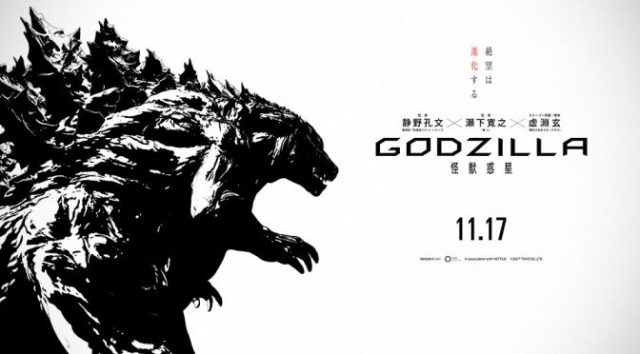
Care of Godzilla expert August Ragone’s always authoritative website, The Good, The Bad, and Godzilla, news comes that Toho Animation have just dropped the first teaser trailer for their forthcoming anime, Godzilla: Monster Planet (international title: Godzilla: Planet of the Monsters).

With a screenplay by Gen Urobuchi, writer of animated TV series including Peulla Magi Madoka Magica and Kamen Rider Gaim, and directed by Koubun Shizuno (Knights of Sidonia) and Hiroyuki Seshita (Ajin: The Demi-Human) the film, the first in a trilogy, will premiere in Japan in November, while Netflix have picked it up for international worldwide distribution.

Executive producer, Yoshihiro Furusawa, was reported in Variety as saying “I wasn’t familiar with Godzilla, and I made the film so even those who don’t know Godzilla can enjoy watching it.”

The story is set in the future world of 2048 and centres on a group of human beings who take revenge after being pushed from Earth by monsters such as Godzilla.

Here’s hoping for an animated Godzilla that will banish thoughts of Godzooky from the collective consciousness once and for all.

The Doctor Falls – Emotional And Political As Doctor Who Gets

doctor-falls-promo-pics-9_32

*Caution – spoilers*

“I’m not trying to win. I’m not doing this because I want to beat someone, because I hate someone, or because I want to blame someone. It’s not because it’s fun. God knows it’s not because it’s easy. It’s not even because it works because it hardly ever does. I do what I do because it’s right! Because it’s decent! And above all, it’s kind! It’s just that… Just kind. If I run away today, good people will die. If I stand and fight, some of them might live. Maybe not many, maybe not for long. Hey, you know, maybe there’s no point to any of this at all. But it’s the best I can do. So I’m going to do it. And I’m going to stand here doing it until it kills me. And you’re going to die too! Some day… And how will that be? Have you thought about it? What would you die for? Who I am is where I stand. Where I stand is where I fall.”

For anyone who thinks Doctor Who is never political, last night’s astounding finale to the current season (ten, in reboot terms) saw Peter Capaldi maginificently deliver the preceeding speech.

As a marker for The Doctor, writer Steven Moffat gives us this defining moment not only for the character and for the show but also as a comment on the zeitgeist – make no mistake about it, conscious or not, this is a political statement against the prevailing political winds of the UK and the world as a whole.

Written and performed with the twin qualitities of passion and vulnerability, this speech could as easily be delivered at an anti-establishment rally, with several thousand Corbyn supporters roaring their approval. I have no idea of the personal politics of Steven Moffat, but if the likes of Theresa May and Donald Trump could be seen as the ultimate Doctor Who villains – uncaring despots seemingly determined to wipe out everything good and decent about mankind – then this speech can easily be read as the ultimate rallying cry against them.

Doctor Who has always been good at reflecting the world around us, whether through the filter of technological advances (the Cyberman chant of “delete, delete”) or even politicians being replaced by gas-expelling aliens, but it’s rarely as outspoken against the status quo as in The Doctor Falls.

While not the actual bowing-out of Capaldi’s Twelfth Doctor (that honour comes at Christmas, in a meeting with David Bradley as the First Doctor), this episode served as a superb summation of his incarnation – fiery, humane and yet always inhuman – and also neatly wrapped up the arc for Pearl Mackie’s Bill.

Much of the episode ran at an exceptional pace, narrative and emotional drive running hand in hand to deliver an astonishing gut punch. The scenes between the Cyber-transformed Bill (as close to Cronenbergian body-horror as the family show can possibly get) and The Doctor were heart-rendingly written and performed, this was a terrifying fate for a companion and a warning to all those who travel with the Time Lord.

And if the final ten minutes seemed to wallow a little, it’s tough to argue that this wasn’t earned or deserved. For the children watching, Bill’s eventual fate was all-important for a show which ultimately needs to be aspirational and inspirational.

Steven Moffat, director Rachel Talalay and the Doctor Who crew seemed determined to send this much-improved season off with a bang, an emotional wallop and, by adding the zest of a sharp, humanist comment on the real world, something to truly value.

“I’ve seen things…” – New Blade Runner 2049 Featurette

Blade-Runner-2049-Trailer

If you’re anything like me you’re desperate to see something new from Denis Villeneuve’s Blade Runner 2049, so this just-released making of featurette should send you to bed happy or start your day right.

Featuring lots of beautiful new footage (courtest of Roger Deakins, one of the true modern masters of cinematography), this may well be all you need to see between now and October 6th. I’ve certainly reached the point where I don’t want to see anything more beyond this, as I plan to go into the cinema as spoiler-free as possible.

In the meantime, feast your eyes on the featurette and pray to whatever movie gods you hold dear that this won’t sully the memory of Ridley Scott’s seminal 1982 movie.

Blade Runner 2049 stars Ryan Gosling and Harrison Ford, is executive produced by Ridley Scott, Tim Gamble, Frank Giustra, Yake Badick, Vale Hill and Bill Carraro, produced by Andrew A. Kosove & Broderick Johnson, Bud Yorkin & Cynthia Yorkin, story by Hampton Fancher (based on characters created by Phillip K Dick), screenplay by Hampton Fancher and Michael Green and directed by Denis Villeneuve.

https://www.youtube.com/watch?v=2BUozYf9w0Y

She’s A Wonder! – Jenkins’ Princess Rules!

Wonder-Woman-Tank-Poster

Director Patty Jenkins’ Wonder Woman had a lot of baggage to carry when it arrived in theatres. The previous DC Extended Universe movies (Man of Steel, Batman vs Superman: Dawn of Justice and Suicide Squad) had performed well (though not as well as hoped) at the box office, but were the subjects of vast swathes of critical scorn. Besides this was the more serious battle against Hollywood sexism, where the common perception among those with the power to greenlight productions has long been that women could neither helm nor feature as main stars of big, action franchise movies.

While I’m somewhat late to the game with this review (unusually, Wonder Woman has opened later here in Norway than in many other territories), it has given me the chance to see both of these issues blown out of the water by both the film’s success and critical reaction. The film set records for the biggest domestic opening for a female director ($103.3 million) and the biggest opening for a female-led comic book film, and has, to date, grossed over $500 million worldwide.

And I’m very happy to reiterate the good news. Taken on its own terms Wonder Woman is bright, funny, charming, exciting and a genuine feel-good movie. Taken against the issues weighted against it stepping into the ring you might also call it an outright triumph.

The origin story, well known to comic book fans since American psychologist and writer William Moulton Marston and artist Harry G. Peter brought her to the pages of All-Star Comics # 8 in 1941, is weaved into a World War I adventure which also brings in several of Princess Diana of Themyscira’s supporting characters (including Queen Hippolyta and the Amazons, Steve Trevor and Etta Candy) and in itself is a thoroughly entertaining romp.

Where the film really scores however is in several key ways that contrast sharply with the previous DC movies. Gone is the relentless grimdark misery of Batman vs Superman, the distancing ‘god above us’ approach to Superman and, praise the gods of film craft, the incoherent characterisation, storytelling and editing of Suicide Squad.

Jenkins’ film is generally full of clear storytelling and fun action sequences, even utilising Zack Snyder’s trademark speed ramping to actually help with both clarity and story (its use in an important moment where the Amazons face off against bullets for the first time not only looks cool but packs quite an emotional wallop). There are some genuinely exciting moments of action (Wonder Woman crossing No Man’s Land on the Belgian Front and her subsequent attack on a German stronghold are… sorry… wonders served more by character than empty cool visuals).

Wonder Woman moves at a breezy clip, from Paradise Island to London and finally to the battlefields of Belgium and, while it does ultimately succumb to the usual climax of two super-powered folk hurling big, heavy things at each other, it at least does so in an almost low-key way that provides a little emotional weight. However it doesn’t quite succeed in making the villainous character involved (I won’t name the actor either so as to avoid spoilers) seem massively threatening, which is a shame and sees some points knocked off.

Jenkins does have two extra special weapons: leads Gal Gadot and Chris Pine share terrific chemistry and carry more than their share of the film’s appeal. Pine has slowly become one of our more interesting screen presences, leading one particularly perceptive critic (and he/she will have to forgive my failing memory as to who exactly) to accurately describe him as “a character actor in a leading man’s body.” He’s a pretty face who’s pulled off a number of whip-smart performances and Wonder Woman is no exception, basting Steve Trevor in easy going, old time, movie star charm.

As for Gadot, the camera loves her and she’s well served by Jenkins and her writers (screenplay by Allan Heinberg, story by Heinberg, Zack Snyder, and Jason Fuchs) who together make Diana a warm, relatable character. There are plenty of small moments gifted to her which show why the world falls in love with Diana, and Gadot radiates atomic levels of charm while giving us a genuinely heroic hero, and make no doubt about it, one both men and women can root for!

At one point in the film, Pine’s Captain Steve Trevor tells Diana he’s taking her to London to meet with “the men who can” end the war. “I’m the man who can!” Diana replies, completely on point.

Patty Jenkins, Gal Gadot and Wonder Woman? They’re the women who can.