Marvel’s Masterful, Mystical Doctor Strange

doctor-strangea

Many who know me might suggest I was always going to give this movie an easy ride. Doctor Strange has been one of my most beloved characters since I was first introduced to him sometime in the early 1970s. Let’s face it, I’m an easy mark for a movie featuring anything to do with Marvel’s Master of the Mystic Arts, right!?

But, as excited as I’ve been about seeing the good Doctor onscreen, I was always going to be this movie’s worst enemy, sitting in the dark of the theatre daring it to take a wrong step with the Sorcerer Supreme, challenging it to weigh up against forty years of expectation.  Doctor Strange has lived and breathed in my imagination for decades, so my warning to director Scott Derrickson and the Marvel team might have best been summed up by Yeats: Tread softly because you tread on my dreams.

Thankfully, I needn’t have worried, Doctor Strange delivers as faithful a translation of Stan Lee & Steve Ditko’s creation as a fan could ever wish for, and embellishes it with thoughtful meditations that give this version of the character some important textures.

The thrust of the plot follows that of the comics, and sees talented but arrogant neurosurgeon Doctor Stephen Strange lose the use of his hands in an accident but gain a new life as he travels to the mystical Kamar-Taj to study the teachings of The Ancient One.

As Strange learns to use his newfound powers he comes into conflict with one of The Ancient One’s ex-students and uncovers a threat to the very existence of our reality.

Ultimately what makes Doctor Strange work is that beyond the far-out visuals and imaginative sparkle, Derrickson and the Marvel team have crafted a remarkably human story. Director, script and cast combine to give us a set of characters we care for and the storytelling is gifted with many grace notes of humour and small, human moments. Benedict Cumberbatch shines (sometimes literally) as he enters the Marvel Cinematic Universe, breathing a fully formed life into Doctor Stephen Strange even before the event that takes him on his spiritual journey.

Likewise, both Tilda Swinton and Chiwetel Ejiofor are magnificent as The Ancient One and Karl Mordo respectively, both actors doing a lot of heavy lifting to fill in their unscripted humanity. Likewise, out of necessity of script mechanics, Rachel McAdams as Christine Palmer, fills in a lot of blanks through sheer will of performance. I can only hope she is given more to do in the sequel, because here she teeters dangerously on the edge of being wasted, and McAdams deserves far better than that. Benedict Wong is superb value too, as a version of Wong thankfully and necessarily much developed from the early comics.

The one actor given short shrift is Mads Mikkelsen, which also highlights the film’s one unfortunate weak point. With so much screen time given to introducing Strange and his supporting cast of characters, we’re never allowed to creep beneath the skin of Mikkelsen’s villainous Kaecilius. This is a charge often levelled at Marvel villains of course, and unfortunately Doctor Strange isn’t going to buck that trend.  Thankfully, this is balanced out by the long game developed for Ejiofor’s Mordo, and if you want the full effect of this you should most definitely stay in your seat until the very end of the credits for the vital scene which will no doubt kick off important events for the sequel. Also of note is the final title card, which promises that: Doctor Strange will return.

For a megalithic blockbuster, Doctor Strange has also emerged as a rather personal movie. Director Derrickson’s well documented faith and spiritualism both shine through and inform the film, adding fascinating and thoughtful layers to the story that needs to function for the franchise. The plot is playful with any number of ideologies and both studio and audiences should be happy that such an intelligent, contemplative fit was found for the character.

This thoughtfulness spills through into the climax of the film, which veers beautifully away from the usual CGI slam-fest (though it involves plenty of CGI) to bring about a truly unusual (oh go on then… downright Strange) resolution, true to the character and true to the notions of ego and selflessness at the heart of the mysticism which propels the film, care of Derrickson (and scriptwriters John Spaihts and C. Robert Cargil).

Of course, the real spiritual heart of Doctor Strange in the comics lies in the astonishing visuals envisioned by co-creator, Steve Ditko, and it’s from here the film truly dazzles. In this age of CGI bloat and fix-it-in-post visual effects, it’s increasingly rare to walk out from a movie feeling you’ve seen something wondrous and fresh, and Doctor Strange delivers both feelings in bucketfuls: from travels through glorious LSD landscapes of the psychedelic multiverse to breathtaking battles across ever-expanding M.C. Escher cityscapes, the film is a treat for the senses.

Those senses include your hearing, as Michael Giacchino (composer of wonderful scores for films such as Pixar’s The Incredibles and the recent Star Trek reboot – as well as, allegedly, Marvel’s forthcoming Spider-Man: Homecoming) lavishes the film with one of the studio’s most effective scores, including a Doctor Strange theme (all harpsichord, Hammond organ, sitars and jingle-jangle guitar) that you’re sure to be humming as you leave the theatre.

They say you should be careful what you wish for, but as an almost lifelong fan of the good Doctor, I could not have hoped for a more thrilling, magical and human translation of the story that’s played out in my psyche for so long.

Buy the ticket, take the ride, you’ll be glad you joined Marvel and Doctor Strange for this trip.

Wow! Wonder Woman gets another fantastic trailer…

wonder-woman

The new Wonder Woman trailer has just dropped and it’s another corker!

Everything we’ve seen so far about the Patty Jenkins’ helmed feature gives me hope that DC/Warner Bros. will right the ship of the DC Universe movies that has veered off course so disastrously with their first three films.

Man of Steel, Batman vs Superman and Suicide Squad have pretty much made a complete hash of their characters to date, either grossly misunderstanding what made them so special or burying them within a mass of confused storytelling (or indeed, both).

And while it’s easy to be fooled by trailers and PR material, it’s difficult not to feel some hope that Wonder Woman is going to save the day.

Wonder Woman opens in theaters on June 2, 2017. It stars Gal Gadot, Chris Pine, Robin Wright, Danny Huston, David Thewlis, Ewen Bremner, Saïd Taghmaoui, and Lucy Davis. The film is produced by Charles Roven, Zack Snyder and Deborah Snyder, with Richard Suckle, Stephen Jones, Wesley Coller, Geoff Johns and Rebecca Roven serving as executive producers.

Meanwhile, sit back and enjoy this latest, kick-ass trailer…

Train to Busan – Much Needed Life For The Zombie Film

train-to-busan-review

Whether, like me, you feel the zombie genre hasn’t offered anything new or exciting in a while, or whether you’re still in thrall to the wave of undead films, games and TV shows swarming across our screens, Train to Busan will offer up fresh meat on those rotting bones. To put it simply, this South Korean horror movie has become a late entry on my top films of the year.

The plot is straightforward; a disparate group of passengers board a train just as we are given glimpses that something bad is happening around them. The bad thing, of course, is a zombie apocalypse and director Yeon Sang-ho handles the perfectly timed build like a master, cluing us in ahead of the characters just enough so we feel the noose tightening around them.

Really, saying anything more than that regarding the plot would just spoil the fun for you, suffice to say that all hell breaks loose and the passengers of the train must survive long enough to reach the promised safety of the final stop, the city of Busan.

The film knows what it wants to be and revels in the pleasure of a non-stop barrage of thrills and chills. But, much like George Romero’s high point in the zombie genre, Dawn of the Dead, Sang-ho uses the film to make some barbed comments on society. That it makes them is worthy of attention and even though the film makes them a little bluntly on occasion these moments tend to be undercut with character building emotion, so they’re rarely wasted. One particular revelation is actually groan-worthy in its attempt to tie things up too neatly, but the director is smart enough not to linger on it too long before leaping into the next bravura sequence.

And bravura these sequence are. In the interests of keeping this review spoiler free I’ll just mention a favourite, prolonged sequence where our core group of passengers attempt to rescue another group trapped at the rear of the train, meaning they will need to pass through several train cars of zombies – and back again. It’s a sustained line of set pieces highlighting both the film’s ease with character development and its ability to ratchet up the tension, making smart use of some interesting wrinkles on the usual zombie characteristics and in particular of the location and its surroundings. You might even shed a tear or two.

There are some clichés here to be sure (the noble sacrifice gets more than one airing), but Sang-ho and writer, Park Joo-suk give their characters enough life (the living ones at least) to carry you through any hiccups and do enough with the nail-biting action and visuals  to make this a first class journey (…oh come on, I had to say it at some point in this review).

Train to Busan is a wonderful, high concept action/horror movie told with breathtaking confidence. Stylish, elegant and exciting, this is destined to become a major cult horror movie, regarded in the same revered breath as John Carpenter’s run of work from the late 1970s through the 1980s. A far less interesting Hollywood remake surely beckons.

Just when you think there’s little left to be said or done with the walking dead, along comes a movie which shows there’s life in those shambling old creatures yet.

Daniel Radcliffe Is The Only Stiff Thing About Swiss Army Man

swissarmy

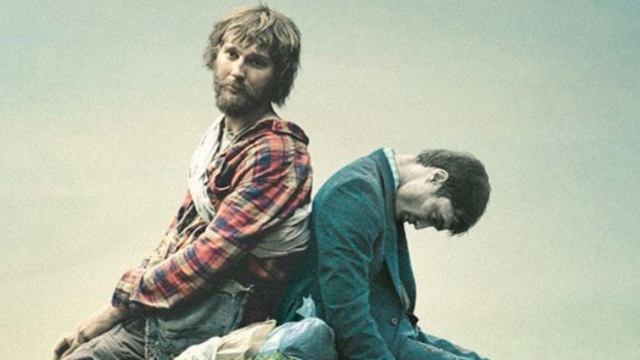
What if I were to tell you that the most heartwarming, life affirming movie of the year involves the farting corpse of Harry Potter showing Paul Dano the meaning of friendship and love? I should mention that it also verges on being a musical.

If that seems unlikely, then the opening of the film, written and directed by Daniel Scheinert and Daniel Kwan, will do little to persuade you. Dano, marooned and hysterically lonely on a tiny desert island, is attempting to commit suicide before being saved by the appearance of Daniel Radcliffe’s flatulent corpse washing up on the beach.

What follows next is a journey, both geographically (although that might be part of a grander delusion) and emotionally, of these two lost souls, who gradually connect with each other and, in that bond, reconnect with the world they left behind.

Dano is charming, desperate and possibly off his rocker, but he makes being delusional seem like a highly likable trait (for most of the running time, at least), while Radcliffe further proves his post-Potter career as being of increasing interest. His corpse is, paradoxically, full of life, showing constant curiosity at the strange new/old world that’s trying to come back into focus around him. Despite the constant farting, he is as likable as his co-star, and their utterly charming relationship is a joy to behold even as it flirts with homo-erotic necrophilia. How many films can you say that about!?

It’s all as strange as it sounds, but the quirkiness is held together by a strong emotional core, never quite tipping over into careless whimsy (though a large chunk of the final act veers dangerously close). This is a film full of beautiful and fragile moments, while at the same being chock full of farts and erections. It’s a bold and beguiling mix and the music score and songs, by Manchester Orchestra’s Andy Hull and Robert McDowell are magnificently uplifting, adding yet another wondrous layer to this strange confection.

If you’re not put off by the bizarre description you’re likely to be rewarded with a disarming buddy movie quite unlike any other, one that will make you laugh out loud and tug at your heartstrings. It will linger in your mind long after the final hilarious sequence which somehow manages to turn flatulence into something quite emotional.

And if all that doesn’t convince you, where else can you spend so much time focusing on a dead Harry Potter’s rampant erection!? Trust me, there’s nothing stiff about this film (apart from Daniel Radcliffe).

No Bullshit, The Greasy Strangler Is Warped But Brilliant!

the-greasy-strangler

Big Ronnie is a grinning grotesquerie who wanders around in a series of bizarre outfits, frequently with his nasty-looking penis dangling halfway to his knees. When he isn’t dragging his poor emotionally stunted, needy son, Big Brayden, around to present a tourist trap disco tour of derelict locations, Ronnie covers himself in layers of thick grease and violently murders anyone who crosses him. Or even poor, hapless souls who don’t cross him. Ronnie is not exactly picky when it comes to strangulation.

Underneath the unwashed y-fronts, (literally) in your face fart gags and dangling penises there beats a curiously affecting, albeit diseased, heart. The murder plot eventually gives way to the story of a father and son finding each other after years of emotional abuse, before tailing off into a deep end of… well, actually, I’m not sure exactly what happens at the end. There might be a point to it all, but I’m not sure it actually matters if there isn’t. At the very least you’re sure to come away from a viewing wanting to sing and dance to the line “Hootie Tootie, Disco Cutie!” As cinematic gifts go, that’s pretty decent.

There’s nothing remotely real-world about Jim Hoskings’ film, and yet it’s not difficult to imagine these characters existing on the fringe of society, too out there even to be featured on reality TV shows and living on the same block as Pink Flamingos’ Egg Man and Connie & Raymond Marbles, or even Blue Velvet’s Frank Booth in a lighter mood.

Imagine a film that has some of the oddball feel of a Napoleon Dynamite sequel as made by John Waters, featuring a synth-driven electro pop score, with lashings of sex, gore and greasy murders, and you’ll get a good feel for what you’re letting yourself in for. There are moments of such out and out goofiness (Ronnie’s spotlit, street disco solo – all wild hair, gangly legs and dangly cock – being a prime example) that you can’t help but warm to the strangeness being thrust in your face.

The three leads (Michael St. Michaels, Sky Elobar, Elizabeth De Razzo) give fearlessly physical, genuinely off-kilter performances, putting Jared Leto’s pissant Suicide Squad Joker to shame with what they dare to do for the camera, and still manage to make their characters just a little more than cartoons, giving their three way love triangle more heart than the constant anal fingering might suggest. But don’t worry if you think it’s all going to get too touchy-feely… there’ll soon be a phone sex scene of junior furiously fiddling with his infintesimal cock while mouthing sweet nothings to his amore, such as “Imagine me stroking your clitoris with a pink feather and then you cradle my sack.” This might be the film that the acronym WTF was made for.

The Greasy Strangler is, as they say, not a film for everyone. But it is one of the more bizarre and frequently laugh out loud funny films I’ve seen in a long time. It also has the best and most disgusting prosthetic movie wang since Mark Wahlberg’s Boogie Nights dazzler. So you know you’re getting bang for your buck.

Doctor Strange Trailer Goes Full Psychedelic

strange-bg-collage

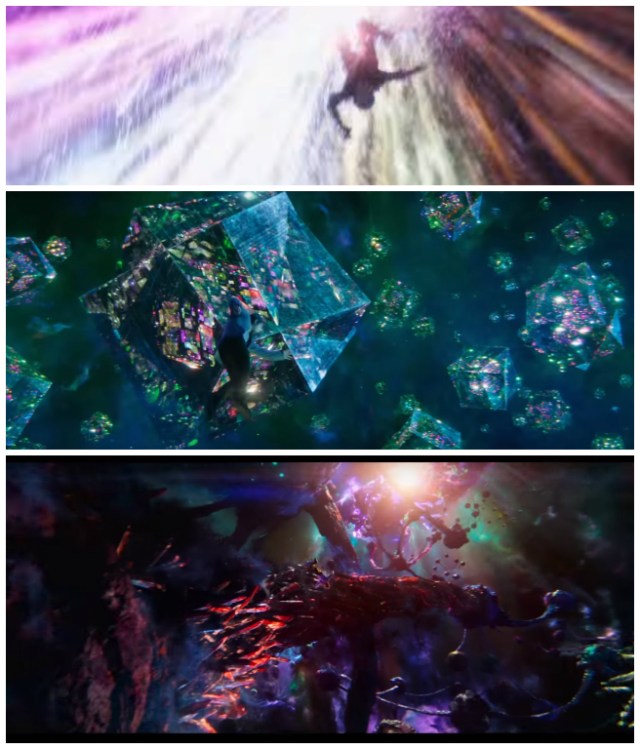
Since all of the previews of Marvel’s forthcoming Doctor Strange movie to date have focused on the impressive yet Inception-inspired visuals of cityscapes folding in on themselves, there has been much nervous talk that the company and director Scott Derrickson would not go full on psychedelic.

Happily, the IMAX featurette released today (see below) can put our little fanboy hearts to rest, for right there, snuck into a piece by Marvel’s head honcho, Kevin Feige, rhapsodising about the comic book genius of artist (and Doctor Strange co-creator) Steve Ditko, is a sequence of visuals guaranteed to bring a smile to the faces of long-time fans (though… nerd alert… it’s a shame neither of the visuals accompanying the talk by Feige are actually drawn by Ditko, but still…).

Obviously (and happily) Marvel and Derrickson have been holding back to reveal too much before the film’s release in November, but these glorious visuals look like a page of Ditko 1960s inspired psychedelia come to life.

As a card carrying (well, FOOM card carrying) Doctor Strange fan since the early 1970s I can honestly say this has me even more excited about what looks like Marvel’s full step into cosmic weirdness.

I’ve got my cloak of levitation and all-seeing Eye of Agamotto ready for November 4th, see you at the cinema!

The Thinning – It’s Not About Hair, You Know…

the-thinning

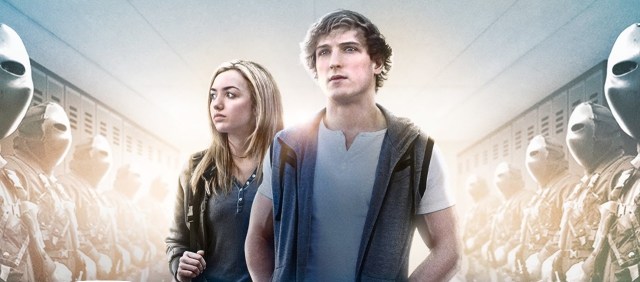
My first thought on seeing this trailer for forthcoming YouTube Red movie, The Thinning, was that it was going to be a story about hair loss.

Introduced by “YouTube star” (it says here) Logan Paul with the words “Hair flip. What’s up?” as he tosses his not quite flowing mushroom bobbed locks to one side, I envisioned this poster child for white male privilege having to endure the horrors of thinning hair during the course of the film, surely ensuring he’d never be allowed to party at Spring Break again.

But no, instead the Young Adult movie is something to do with a whole lot of equally white teens with full heads of hair having to take basic intelligence tests (well, there’s your problem right there, of course). Preying on the fear of exams this seems to entail some shady government plot to cull people with imaginary names (Logan Paul, Peyton List, Calum Worthy… ha ha, Calum Worthy…) who are ejected from their shopping mall utopia to go live with people with bad skin care routines, no Vine account and club cards at Wal-Mart. So basically, it’s a horror movie for people who frequent Urban Outfitters.

Or maybe it’s about killing off the really dumb teens, I couldn’t remember the plot thirty seconds after finishing the trailer, just Logan Paul’s hair.

I’m still trying to work out whether this is one of the most ghastly things I’ll never watch, or if it’s actually a work of genius – a film completely populated by fully-realised CGI simulacrums who have been named by committee (…ha ha, Calum Worthy).

Either way, The Thinning isn’t about hair loss. Which seems like something of a missed opportunity to me. But then I’m not Logan Paul.

“Hair flip!”

My Favourite Scene – Spaceship Porn (a Star Trek anniversary special)

star-trek-the-motion-picture-02

Sometimes when watching a movie, one scene can bring that entire film to life, or give you a sense of ownership of that film (or of being owned by it) even when all your critical senses might be fighting against you. This article will be the first in an occasional series where I look at the scenes which do that for me. And today, in honour of the 60th anniversary of Star Trek, I’m going for a doozy!

Released in 1979 and directed by filmmaking great, Robert Wise, Star Trek: The Motion Picture carried a lot of baggage and continues struggling with much of that baggage today.

In the wake of the astonishing box office and cultural success of Star Wars, Paramount Pictures finally gave the greenlight to a long gestating relaunch of their own science-fiction franchise, one which would bring to the big screen the much-loved cast of the CBS TV series, cancelled a decade before.

With a (for its time) astronomically huge budget of around $46 million, mixed reviews from the critics (who found the film ponderous and lacking in the sheer verve of George Lucas’ blockbuster) and less than expected earnings from cinema audiences, the film was considered a failure by some.

Regardless of what might be seen as its failings, there is a scene early in the film so audacious that I can’t help but fall in love with this lopsided puppy every single time.

The story is set some unspecified period of time after the TV show’s five year mission. As a result of a huge, galactic something making its way grumpily towards Earth, wiping out everything and some unfortunate Klingons in its path, a now desk-bound, pen pushing Admiral Kirk (William Shatner, of course) fights his way back into the command seat of Starfleet’s greatest spaceship, the U.S.S. Enterprise.

Transporting up to a station orbiting above the Earth, Kirk is greeted by his old Engineer, Commander Scott, or Scotty with the suspect accent as we know him better (still portrayed by James Doohan). As a plot point, this is done because the still-being-refurbished Enterprise is having some technical issues and its own transporters are out of order (leading to the icky death of some clumsily rematerialized crew members later), however it’s also done to give Star Trek: The Motion Picture its single greatest scene.

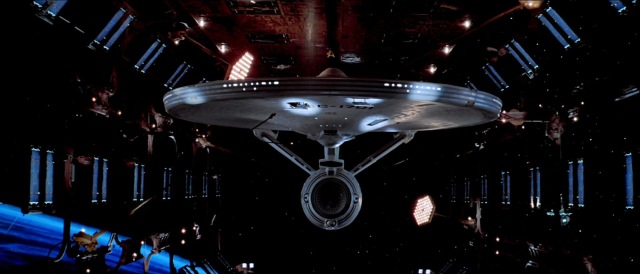
Scotty takes Kirk across to the Enterprise in a small shuttlecraft and both Kirk and the viewer are given tantalising views of the refurbished ship, ablaze in a sea of lights, in a drydock floating in space. The filmmakers referred to their look for the Enterprise as “an ocean liner in space”, and they really hit a home run with it.

As the shuttle draws nearer to the Enterprise, we become Kirk, viewing his beloved spaceship for the first time in years. Jerry Goldsmith’s quite beautiful, rousing and romantic music score underlines both the majesty of the starship and the huge emotions welling up inside Kirk.

At first they move outside the drydock’s frame, flirtatiously teasing us with the beauty inside, the Enterprise’s porcelain curves hidden behind steel and metal. Then Scotty swings the shuttle out wide, letting the drydock’s lacy underwear fall away, revealing the spaceship in all its naked glory.

Scotty cruises the shuttle all around the docked Enterprise allowing Kirk (and us) an intimate view of the ship’s beautiful body, he glides between the wide nacelles like he’s parting the legs of a woman prior to making love, then in an absolute crescendo of visuals and music, he eases the shuttlecraft closer… closer… to the docking port on the Enterprise. The film reaches an almost literal sexual climax as the shuttlecraft enters the Enterprise, joining as one.

Kirk looks at his friend and with a satisfied post-coital tone says, “Thank you, Mr Scott.”

Make no mistake about it, this scene is pornography, plain and simple. It’s hardcore porn that satisfies several fetishes – it’s spaceship porn, special effects porn and out and out Star Trek porn. It shows off the Enterprise lovingly, lustily, it luxuriates in the expertise and skills of the artists and technicians who bring the scene brilliantly to life and it wallows in the characters of Scotty, Kirk and his spaceship amour, the Enterprise. It’s filmed exactly like a love scene, long, sensual shots, music rising and falling with Kirk’s (and our) growing arousal.

The whole scene (from Kirk’s arrival on the space station to the final vehicular penetration) is almost seven minutes long, it serves next to nothing in terms of plot function (the points it does cover could easily be carried elsewhere, and with greater brevity) and in fact, it could be argued that the sequence stops the whole film dead in its tracks. I’d certainly struggle to argue with that.

And yet… the whole thing is played with such breathless devotion to its various fetishes, and with such candour at its intended aims, that what should leave me impatiently drumming my fingers instead has me grinning from ear to ear like a lovesick fool.

It’s pure folly to leave this scene intact, but it’s such a thing of confident and giddy fearlessness to subject a cinema audience to this lust in space that all you can do is surrender to its spunky charm and go with the flow.

After this scene, the film can happily take me wherever it wishes to go. Maybe to even boldly go…

Beauty And The Beastly – The Neon Demon

the-neon-demon-elle-fanning

The Neon Demon, directed by Nicolas Winding Refn, sees Elle Fanning’s Jesse, a beautiful small-town girl, moving to L.A. and finding herself negotiating a path through the city’s fashion scene, surrounded by a glistening wave of beauty that’s powered by sinister vampiric urges, full of envy, obsession, necrophilia and cannibalism.

The film moves at a cool, dreamlike, almost ambient pace, a world away from the ADHD editing of a Michael Bay film, but it never meanders, its sense of menace and ugliness building assuredly.

Then Refn goes for a bravura ending, one that has seen people throwing their arms up in disgust and outrage. It’s certainly horrific , but it’s also a thoroughly logical and quite perfect summation, and definitely not easy to forget (should you feel the need to). It’s also very funny, in its own darkly twisted way.

Fanning is terrific in this. It would have been very easy (read: lazy) to have her portray the innocent swept up in terrible events beyond her control, but both actress and filmmakers are too smart for that. The actress plays Jesse with a knowing air – she’s new to the world, certainly, but she’s not unaware of her currency in that world. She knows she’s pretty and that she can make money from being pretty, as her character says.

There are a number of power plays twisting through the cast of characters, and Jesse is at the centre of them: everyone wants something from her and she knows this. But she also wants something from them. Refn plays with the audience’s expectations as to whether or not we should like her as a central character, and it’s this ambiguity that gives her edge.

Both she and the rest of the cast work hard to give their characters inner life, it’s one of Refn’s traits, allowing his actors to fill in the blanks through… well, acting, and it works well here. Jena Malone, Christina Hendricks, Alessandro Nivola, Abbey Lee, Bella Heathcote and Karl Glusman populate Jesse’s orbit, and it’s a fine cast (not to use that word in such a distasteful way as Nivola’s character uses it in the film), while Keanu Reeves is almost unrecognisable as the truly awful dirtbag who runs the motel in which Jesse resides.

Refn is defiantly channelling Dario Argento’s Suspiria here, not just with the colour splashed visuals, but with the whispery, insistent voices of dark magics seeping through every frame, and Cliff Martinez’s electronica beats pulsing and throbbing out a suitably modernist proxy for Goblin. Of course, The Neon Demon doesn’t take place in rain-drenched Munich and Freiburg but in sun-splashed Los Angeles, nevertheless these two films would make a superbly sympathetic double bill. Or, given how brutal each film is, should that be a superbly unsympathetic double bill!?

This would be the perfect point to sing the praises of Natasha Braier’s cinematography, Erin Benach’s costumes and Elliott Hostetter’s production design, all of which are gorgeous. Refn and his collaborators don’t skimp when it comes to replicating the high end excesses of the fashion world, I doubt we’ll be treated to a more visually ravishing movie this year.

This is a filmmaker is in absolute control of his craft, telling the story he wants to tell with precision but, like all great art, forcing the viewer to bring in their own experiences and prejudices. His visual style is all glamour and gloss but the emotions lurk beneath this gossamer thin veneer, they’re dirty and ugly and perfectly 21st century human. The concerns of the film are narcissism fuelled by the fashion industry and by our wider culture, and a hard stare at the way we both deify and objectify young women.

But he’s also asking us to look at the transient nature of beauty in the moment, in the right moment, and at our own need to possess and, ultimately, to kill that beauty. The Neon Demon’s world is one of mixed messages, as is ours.

Is Refn telling us anything we don’t already know or suspect about the fashion industry, or indeed about ourselves? No, but the journey he takes us on while reinforcing that knowledge or those opinions is what makes the story worth telling.

Anyone who thinks The Neon Demon is a case of style over substance has simply been seduced by the sheen. Which is rather one of the points here, no? But those who think this are perhaps cut from the same cloth as those who walked away from Only God Forgives disappointed that it wasn’t two hours of Ryan Gosling wading through fist fights.

Refn’s film has proved to be divisive and that seems justifiable. Like the world it thoroughly eviscerates, you’ll either be utterly repulsed by it or enthralled by it. And that’s great, it’s what I love about both Refn and this movie. This is still fiercely the same director who made the Pusher trilogy, his views of the underbelly still as savage, his filmmaking style still as uncompromising. Refn is punk: vulgar, energetic and wonderful.

You don’t like it!? The Neon Demon seems to be saying almost as a clarion call for Refn’s entire body of work. Okay, great, it’s not for you. Fuck off. If you do, then allow its plumped, sumptuously lipsticked lips to lock onto yours and you’ll be rewarded with the smell of the fetid, rotting meat breath that follows. For me, it’s one of my favourite films of 2016.

The Neon Demon ain’t pretty, but it sure is beautiful.


Thank you, Gene – however it’s pronounced.

young frank

Gene Wilder, one of the great comic actors has passed away, at the age of 83, from complications of Alzheimer’s disease according to Variety.

Wilder is rightly famed for his many roles partnered up with Mel Brooks or Richard Pryor in The Producers, Blazing Saddles, Young Frankenstein, Silver Streak, and Stir Crazy. And of course, to a generation of filmgoers he was iconic as Willy Wonka, in the 1971 adaptation of Roald Dahl’s story.

The breadth of his career is sometimes overshadowed by these more well-known films, so it’s good to also remember his performances in Death of a Salesman, Bonnie & Clyde, Start the Revolution Without Me, Everything You Always Wanted to Know About Sex* (*But Were Afraid to Ask), The Adventure of Sherlock Holmes’ Smarter Brother and The Frisco Kid.

Growing up in the 1970s Wilder was completely ubiquitous, a part of the cultural fabric of my background. I saw his work with Brooks – Young Frankenstein and Blazing saddles in particular – so many times at the cinema that I could re-enact Wilder’s neurotic, breathless lines by heart.

Wilder once said: “Actors fall into this trap if they missed being loved for who they really were and not for what they could do – sing, dance, joke about – then they take that as love.” If that was a trap, it was one we happily fell into with him.

UPDATE. Wilder’s family just released the following, quite beautiful statement on his passing:

“We understand for all the emotional and physical challenges this situation presented we have been among the lucky ones — this illness-pirate, unlike in so many cases, never stole his ability to recognize those that were closest to him, nor took command of his central-gentle-life affirming core personality. The decision to wait until this time to disclose his condition wasn’t vanity, but more so that the countless young children that would smile or call out to him “there’s Willy Wonka,” would not have to be then exposed to an adult referencing illness or trouble and causing delight to travel to worry, disappointment or confusion. He simply couldn’t bear the idea of one less smile in the world.

He continued to enjoy art, music, and kissing with his leading lady of the last twenty-five years, Karen. He danced down a church aisle at a wedding as parent of the groom and ring bearer, held countless afternoon movie western marathons and delighted in the the company of beloved ones.”