Independence Day: Resurgence – bad, but not bad.

london_independence_day_resurgence-HD

Let’s get this straight from the start: the very, very belated sequel to Dean Devlin & Roland Emmerich’s 1996 blockbuster is utterly predictable, suffers from a mostly leaden script, is occasionally silly, and is definitely not too smart. It is what many would term a ‘bad’ film.

However, for all that, I’m going to defend it for sneaking in a lot of intriguing ideas, and for the fact that not once during its 120 minute running time did I feel bored or was I overwhelmed by Michael Bay/Transformers-style “too many E numbers” compositions or editing. In short, was I not entertained? Well, yes, I was.

The plot itself can be written on the back of a (small) popcorn box – it’s twenty years later, the aliens return in a bigger ship, a bunch of stuff happens, things look bad for mankind and (SPOILER ALERT) we kick their slimy asses.

This all runs pretty much as expected (in fact, exactly as expected). Most of the surviving characters from ID4 crop up and run through their shtick, with the huge exception of Will Smith, who obviously felt this wasn’t going to be his much needed return to blockbusterville. The lack of Smith gives us more time to spend with Jeff Goldblum, and this should always be considered a benefit.

Now, snuck into all this predictable guff are some highly admirable concepts and character arcs, and this is where things get interesting. The world that ID:R posits is that the two decades since the first invasion have seen mankind put aside its petty international squabbling and come together as a unified planet (and boy, as someone from the UK, does that hit home right now), it also expands on the background of the aliens interestingly.

Many of the supporting characters are also shown to be normal people doing good and heroic things in terrible circumstances (above and beyond the super heroics of the chiseled leads): there’s a rather nice arc where Judd Hirsch’s character is saved by some orphaned children and then, later in the narrative, he stops his flight to find his son to save another group of stranded children. It’s a nicely understated piece of karmic business that wouldn’t hope to exist in many modern blockbusters. There’s also a subtle but definite gay relationship gifted to one of the returning characters, it’s a nice addition handled in a nice way.

These positive views of the human race and their heroic acts and ideas shine quite brightly through the otherwise by-the-numbers story and frequently risible, exposition heavy dialogue, and when added to always clear film making (definitely something of a rarity these days), plus some genuinely cool sequences (the climax, involving the alien queen and a whirling fleet of alien ships, while dumb as a box of frogs, is undeniably visually exciting) it shows that Independence Day: Resurgence is far from the complete disaster many reviews have suggested.

For a bad movie it sure has a lot of good qualities.

Doc Savage Returns as The Rock!

doc savage dwayne johnson

Originally running in a series of Street & Smith pulp magazines from 1933 to 1949, Doc Savage, the Man of Bronze, a.k.a. Clark Savage Jr., was a direct predecessor to, and a major influence on the character of Superman, lending him the first name of his secret identity (as Clark Kent), a Fortress of Solitude in the North Pole and an unwavering desire to do good in the world.

Created by Street & Smith Publications’ Henry Ralston and John Nanovic – but fully realised by writer Lester Dent (under the house name, Kenneth Robeson) – as a companion title to their successful character, The Shadow, the bronze-skinned Savage, a physician, surgeon, explorer, scientist, adventurer was supported by a wonderful cast of characters, (rebranded in the 1970s as The Fabulous Five), all world renowned experts in their various fields of law, engineering, archeology and chemistry. In later adventures they were joined by his equally incredible cousin, Patricia ‘Pat’ Savage. Together they fought all kinds of spies, saboteurs and evil geniuses!

Rediscovered by a second generation of readers in the 1960s when the novels were successfully reprinted by Bantam Books in the U.S.A. (from which the most distinctive version of Doc’s look is taken with his sharp, widow’s peak hairline, courtesy of cover artist, James Bama), it was no surprise that a film eventually followed in 1975. Unfortunately, director George Pal seemed intent on holding on to the high camp approach taken by the Batman TV series starring Adam West, but it was not a successful fit and the remaining 180 source novels stayed untapped.

The character has steadfastly remained a cult favourite, however, and has appeared in both radio series and in comic books published by Marvel, DC and others.

But today, after a year or so of speculation, the mighty Dwayne Johnson, a.k.a. The Rock, announced via his Instagram feed that he will be starring as Doc Savage in a new film, written and directed by Shane Black.

As one of the smartest writer/directors in Hollywood (and if you haven’t seen his film, Kiss Kiss Bang Bang yet, you should drop whatever you’re doing and rectify this immediately), the thought of Black helming an adventure of a character I’ve loved since the mid-1970s is exciting, and if he can finally give Johnson the kind of role the mega-watt charming actor deserves, then this has the potential to be something very special indeed.

No word yet as to whether or not this will be a 1930s-set period piece, but whatever The Rock and Black cook up is bound to be worth following.

Here’s hoping for a longer run for Doc in the cinema this time!

UPDATE: While talking about his new film, The Nice Guys, with Hitfix and the Nerdist Writers Panel podcast, director Black seems to confirm that Doc Savage will indeed be a 1930s-set period piece, which is great news!

Elle and the return of Paul Verhoeven

Elle

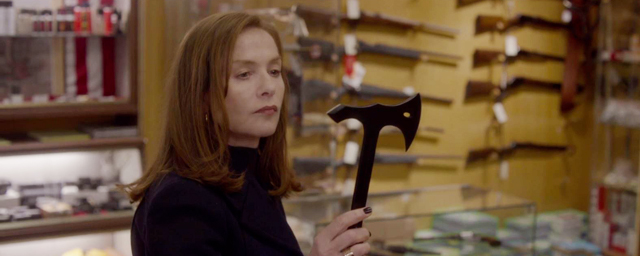
It’s been a while, but the trailer for Paul Verhoeven’s first new film in ten years, Elle, looks like the rascally Dutch Master might be back with some rekindled fire in his belly.

The plot for Elle sounds comfortably, or uncomfortably, in Verhoeven’s shifting wheelhouse, as Huppert plays a businesswoman raped in her home by an unknown assailant, who then takes it upon herself to stalk him back. The film is based on Philippe Djian’s 2012 novel, Oh… and sees Verhoeven shooting for the first time in the French language.

Starring the always interesting Isabelle Huppert, Elle suggests a return to the kind of psycho-sexual fare offered by Verhoeven’s earlier films, such as Spetters, The Fourth Man or even Basic Instinct (infamous for both the tease of Sharon Stone flashing her crotch for avid freeze-framers and for allowing Michael Douglas to wear a Dad-sweater to a nightclub).

If we’re very lucky, this will see Verhoeven offending everyone when it is screened in competition for the Palme D’Or at the 2016 Cannes Film Festival, and with both this and Nicolas Winding Refn’s The Neon Demon showing, it promises to be an interesting time for festival attendees.

Sony Pictures Classics have picked up distribution rights in the U.S. and elsewhere, so hopefully we can all get down and dirty with Verhoeven again soon.

Uncle Bill and Isao Tomita

snowflakes5963

I’ll always be grateful to Uncle Bill. I grew up in a block of flats, surrounded by a lovely, close-knit set of neighbours and my favourite amongst them all was Bill Bartlett who, with his wife Connie, lived directly below us. Bill and Connie loved music, particularly Barry White, and they had a big sheepskin rug in front of their fireplace – which they always intimated they made love on while listening to the Walrus of Love.

Uncle Bill, as I affectionately called him, was a cultured man who introduced me to art, photography and music, he would help me with my homework and we would listen to jazz, soul and electronica. Isao Tomita’s Snowflakes Are Dancing (based on the work of Claude Debussy) was released in 1974 and Uncle Bill adored it, playing it endlessly as we sat on their balcony, flitting between my schoolwork and books of photography (and cheekily allowing me a cold glass of beer if it was a hot summer evening – I was about twelve or thirteen, these were different times).

Tomita, of course, was one of the pioneers of electronic music and a hugely influential and important figure in the worlds of  music, film and animation. He composed the theme song and incidental music for Osamu Tezuka’s animated television series Jangaru Taitei (Jungle Emperor), released in the West (albeit not with Tomita’s theme music) as Kimba, The White Lion. He also created music for films and television shows such as Catastrophe 1999, The Prophecies of Nostradamus (U.S. title: Last Days of Planet Earth), Zatoichi and Mighty Jack, and in the wake of Snowflakes Are Dancing, released a number of classically themed albums of electronica, including Igor Stravinsky’s The Firebird, Modest Mussorgsky’s Pictures at an Exhibition, and Gustav Holst’s The Planets.

Uncle Bill passed away several years ago, having left a vast, indelible mark on my life, and now Isao Tomita, one of the pioneers of electronic music, has joined him. I hope the two of them are sharing a cold beer together, somewhere as warm and loved as the very special place they inhabit in my memories.

C’est la guerre – High Drama in Netflix’s Marseille

Marseilles

Coming to the end of 25 years as mayor of Marseille, Robert Taro, played by Gerard Depardieu, is pulled into a war of succession by his formerly loyal protégé and deputy, Lucas Barres (Benoît Magimel), and the stage is set for a series of betrayals and revelations, with the criminal underworld of the city never far away.

Created by Dan Franck (author of both novel and screenplay of the movie, La Séparation), Marseille represents a big move for Netflix, as it’s their first globally high profile, native language show – a move to be unquestionably applauded – and so what kind of bang do we get for our Euro here?

Beginning and ending with Depardieu’s mighty frame snorting coke at the Stade Velodrome while Olympique de Marseille entertain the masses, like some debauched Roman emperor at the Coliseum, in between we’re treated to all manner of political and personal chicanery, leading to an ending which is all kinds of wonderfully over the top grand opera.

Depardieu just about manages to keep his character this side of sympathetic, but even after eight episodes it’s difficult not to feel that though he’s obviously having fun there’s nothing really stretching him, and needs a few big scenes with some salty dialogue to show what he’s really capable of.

Benoît Magimel, as the mayor’s seemingly loyal deputy, fares a little better, striding through the show trailing a mixture of charm, slime and grit but always managing to give us glimpses of the humanity beneath. Géraldine Pailhas and Stéphane Caillard as Taro’s wife and daughter respectively, are interesting but not massively fleshed out yet (a trait levelled against many of the supporting characters), it would be good to see both actors provided with a little more fire in their roles.

Netflix’s latest high profile drama series might lazily be described as a Gaelic House of Cards, but that would be doing both shows a disservice as each paints with a different palette. Franck’s show gives the city itself a richer identity, encompassing a more diverse social, economic and racial tapestry, which gives it a very distinct flavour to its network stablemate.

The show is atmospheric and engaging, unfortunately favouring style over substance, but when everyone is scheming, backstabbing and fucking with such glee it’s hard not to get wrapped up in the grimy fun. There might be nothing here we’ve not seen before, drama-wise, but the sheer French-ness of it all makes it an utterly compelling divertissement. And the show is likeable enough to hope that a second season might fill out the charming flesh on display and put a little more meat on the bones.

Unlike the French national anthem there’s nothing particularly revolutionary in Marseille, but it’s all done with such beaucoup de gusto that you won’t mind.

Pure filth – Thundercrack! (1975) Blu-ray review

thundercrack.jpg-2

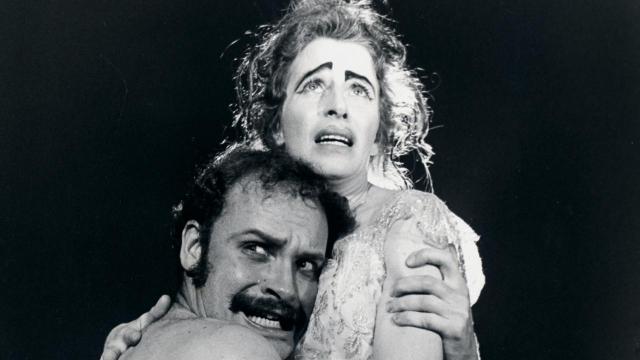
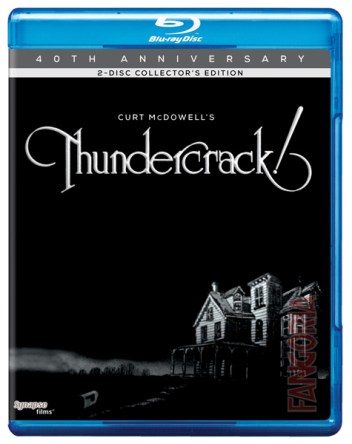
Imagine a film that mixes elements of Psycho, John Waters’ trash epics and Douglas Sirk melodramas and then ladles all that up with lashings of full-on, 1970s moustached and hairy-assed porn. The existence of Curt McDowell’s Thundercrack!, the infamous 1975 perverted noir underground comedy means you don’t have to imagine such a beast.

Thundercrack! became my very own Moby Dick (pun very much intended) when British customs officials seized the print of the film on both occasions I attempted to see it at London’s Scala Cinema in the mid/late 1980s (or at least that’s what we were told by management, maybe it was just a bit of good, old fashioned carny huckstering), but now anyone can indulge themselves in the comfort of their own home with Synapse Films’ 40th anniversary blu-ray edition.

THUNDERCRACKDISCNEWS

When a disparate group of strangers are stranded at the old, dark house of a bereaved and off-her-rocker widow, the stage is set for a deranged psychodrama of extraordinary proportions and a night of psychological game-playing and rampant sex ensues. Men, women, dildos, penis pumps, vegetables and escaped circus animals engage in down and dirty shenanigans, with pubes and cum filling the screen and making sure you’ll never look at a cucumber in the same way again. Mix all this with pickled brains in jars, death by locust, the fear of girdles, the curse of enlarged testicles and some wonderful, feverish storytelling and lighting effects and you know you’re witnessing something unique and unforgettable.

Pitched at a constant, heightened state of near-hysteria, the film is full of cracked performances and hilarious, ripe monologues (delivered even in the midst of blowjobs), and the sheer, joyful tastelessness of this perfect parody leaves you in no doubt that Thundercrack! was never intended for the dirty mac brigade but rather as an almost artistic attempt to push some boundaries for the more imaginative (not to mention brave) viewer.

Synapse worked closely with the director’s sister (and one of the film’s stars) Melinda McDowell, for this anniversary edition and the effort shows. It’s a beautifully put together disc, with the film looking and sounding as good as it’s ever likely to, and packed with a gaggle of great extra features including a documentary, a director’s commentary (taken from audio interviews) and outtakes from the film. Really, it’s a miracle that we would ever live to see this film treated with such respect and care on home video.

I worried that there was no way this film could possibly live up to almost thirty years of expectations. I’m happy to say that McDowell and company proved me wrong, shocked me on the sofa and left me feeling delighted, entertained… and grimy as hell.

Hello dolly – The Boy (2016)

the boy photo

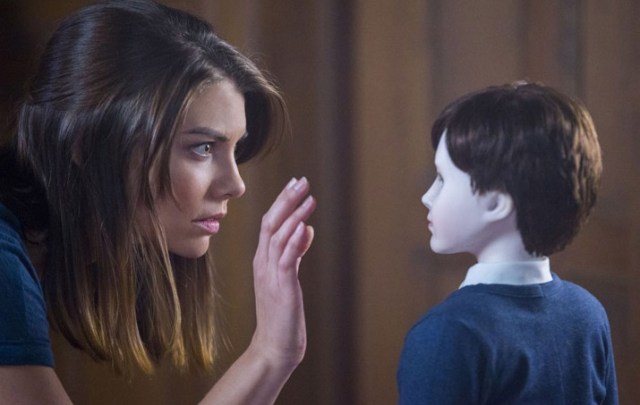
An American nanny on the run from a difficult recent past takes a job at a secluded English manor house and is as disturbed as the viewer to discover that the boy she has been hired to look after is in fact, a doll, which might not be as lifeless as she first thinks.

The Walking Dead’s Lauren Cohan, as the unfortunate nanny, is a strong presence and gives a very likeable central performance, surrounded as she is by only a small handful of other characters. Cohan hits her beats perfectly, remaining nicely sympathetic and thankfully never tipping into annoying hysteria as events build around her.

William Brent Bell directs with some genuinely creepy sequences and at a lovely, measured pace, in a style not often afforded to modern horror films. In fact The Boy has the feel of a higher budgeted Hammer House of Horror episode that makes for an enjoyable viewing, for the first three quarters of the running time at least.

Of the film’s weaknesses, and there a few, the reliance on dream sequences is unnecessary and unfortunate, since the rest of the film seems smart enough to have avoided such tired clichés, and there’s a wonderful feeling of English quirkiness in the first act, in fact downright weirdness, that I wish had been continued through the rest of the film. At one point I could imagine it becoming become a particularly mordant episode of The League of Gentlemen, commenting on the phenomenon of ‘reborn’ dolls.

Finally, the third act revelation is a major let down – even involving one character pulling a stunt so groan-inducing it seems difficult to believe no one vetoed it in the editing room – as events suddenly lurch into slasher-film territory and sabotage the good will built up by the previous eighty minutes.

It’s a shame, because had the story stuck to its guns this could have been a highly effective chiller, built mostly around restraint and atmosphere. Instead, the final twist left me shrugging and rolling my eyes… which at least is appropriate to the film’s final shot, I guess.

There’s enough good stuff here to make me interested in whatever director Bell does next, as this might have been an excellent addition to both horror sub-genres of spooky doll and child ghost movies, but sadly this toy story doesn’t have legs to stand on.

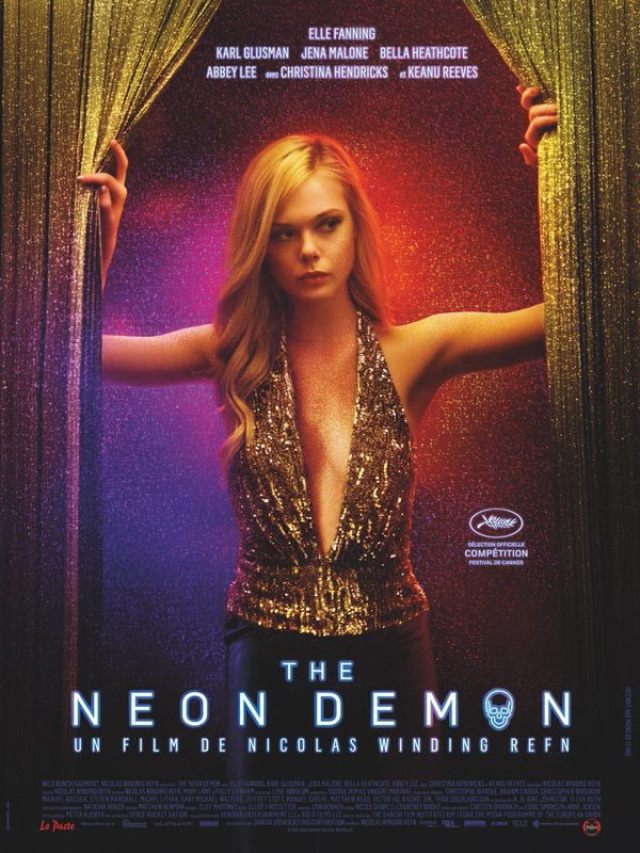
Poster love – The Neon Demon

The-Neon-Demon-Poster_1200_1600_81_s

I’ll put my hands up and admit that I get buzzed for pretty much anything coming from the beautiful and obtuse sensibilities of Nicolas Winding Refn, so it’s no surprise that I’m excited about the new poster for his forthcoming film, The Neon Demon.

Just like the recently released trailer, this looks gorgeous and has me chomping at the bit to see the film, which stars Elle Fanning as a young model entering the vampiric world of Hollywood. Little else is known about the plot right now (other than it features an exceptionally strong female cast), but at the very least it’s guaranteed to be a visual feast.

The Neon Demon will premiere in competition at the imminent Cannes Film Festival.

Source: Birth.Movies.Death.

What The Devils is Wrong with Warner Bros.?

The Devils 2

It’s easy to understand why Warner Bros would allow Ken Russell to film a lavish adaptation of Aldous Huxley’s book, The Devils of Loudon. It’s less easy to understand why the studio that produced the film seems so reluctant for audiences to see it today.

Russell rode the incredible wave of British film directors that still impresses today, along with the likes of Nicolas Roeg, Tony Richardson and Lindsay Anderson. So, coming fresh off the success of Russell’s adaptation of D H Lawrence’s Women in Love for United Artists in 1969, with critical praise, good box office and an Academy Award (for Best Actress, Glenda Jackson), Warner Bros were keen to climb on-board the Russell train. When Russell pitched the idea to make his screenplay – originally written for U.A. before they pulled out of the project, based partly on Huxley’s book from 1952 and partly on the 1960 play The Devils by John Whiting – the studio agreed to give the project the greenlight.

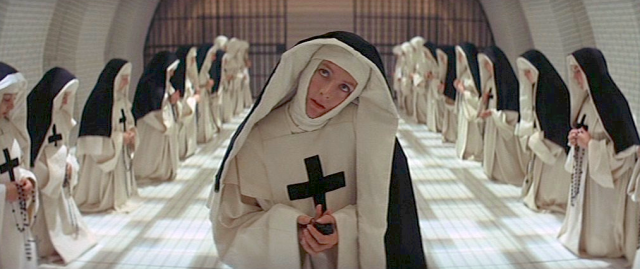
The book, play and Russell’s film, all dramatise real life events that took place in Loudon, France, in the 17th century. Cardinal Richelieu and Louis XIII were attempting to stem the power of Protestant towns such as Loudon, and found themselves in conflict with the town’s very earthly priest, Father Grandier, and decided to turn to their advantage a series of supernatural possessions which seemingly afflicted the town’s Ursuline convent, presided over by the sexually obsessed Sister Jeanne des Anges.

Russell delivered a bold, profound and outrageous movie, with astonishing set design from Derek Jarman, a dissonant score from Peter Maxwell Davies and blistering performances from stars Oliver Reed, as Grandier, and Vanessa Redgrave, as Sister Jeanne.
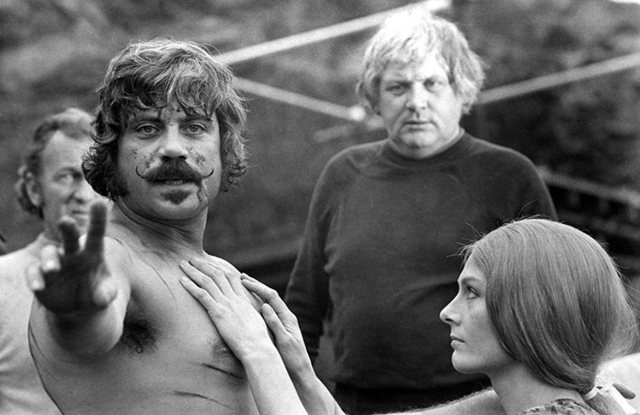
The Devils - Russell - Reed - Redgrave

The studio’s love affair with film and director ended harshly. Both the British Board of Film Censors and Warner Bros. itself demanded heavy cuts for its sexual, violent and religious content before granting an ‘X’ certificate in the UK and further drastic cuts were inflicted by the studio for the film’s release in the USA. The publicity for its American release clearly showed the studio’s discomfort over the film, defensively exclaiming, “The Devils is not a film for everyone” on posters and in trailers. This severely truncated edit would be the only version deemed acceptable by the studio for the following decades, at least in the countries where it wasn’t already banned. In fact, the film has not received an official release on home video in the U.S.A. since a VHS issue in 1995.

In 2002, journalist/broadcaster Mark Kermode (who cites as influence an important article by Tim Lucas detailing the various cuts imposed on then extant home video versions of The Devils, from the September 1996 issue of  Video Watchdog magazine) uncovered footage cut from the film that had long been considered lost, including the infamous Rape of Christ sequence (in which the hysterical nuns sexually assault a statue of Christ), and in 2004 a restoration of the film reinstated much of this footage. Over the next few years, this fullest, uncensored version ever assembled since Russell’s original cut in 1971 was shown to great acclaim on many occasions at public screenings around the world, with the hope that Warner Bros would respond to the call for an official release.

After much negotiation with Warner Bros., the British Film Institute was allowed to release a disc of The Devils in 2012. Despite having access to the 2004 restoration however, Warner Bros refused to hand over any original film materials for a new high definition transfer and instead presented the BFI with a digi-beta tape of the original British X certificate version, meaning they could only release the 1971 cut and only on DVD.

Hell on Earth: The Desecration and Resurrection of The Devils, the Paul Joyce documentary presented by Mark Kermode that had screened on the UK’s Channel 4 in 2002 complete with the Rape of Christ sequence, was included on the disc’s supplementary features. Warner Bros refused permission for the sequence to be used at all on the disc and so even the documentary had to be cut. The uncut version of the documentary remains viewable on YouTube as of this writing, and despite being hobbled by Warner Bros, the features-packed disc remains an essential purchase. These bizarre restrictions certainly raise the questions of why Warner Bros would not furnish the BFI with appropriate materials, and why the studio still considers the Rape of Christ sequence off limits.

In May of 2013 I screened the X certificate cut of The Devils to a full house at my own Dave’s Movie & Music Nights in Volda, Norway and I’m proud to say that in over four years of screenings I have never seen an audience quite so affected by a film. Afterwards people stayed in their chairs, wanting to process what they had just seen, eager to discuss it. Certainly, they were shocked by the film, but they were also astonished, moved and stimulated by it. And this rather, is the point here: The Devils is not a film you can watch passively, love it or hate it this is a film which invites (…actually, demands) a reaction from the audience. Once viewed, it will not easily be forgotten. Can we ask more from a film?

Not long after the screening, while discussing the film with Russell’s last wife, Lisi Tribble (who had written a beautiful and personal introduction for me to read to attendees) the idea was hatched between us to start a campaign to help secure a release of the restored, uncensored director’s cut.

With Mrs Russell’s blessing and active participation, we have managed to get a number of high profile organisations, culture sites, directors, producers and writers to support the campaign on social media, tweeting and retweeting the hashtag #FreeTheDevils and generally voicing their wish for the film to be released. The campaign page on Facebook, Free Ken Russell’s The Devils, now has almost four and a half thousand followers.

collage combined

In October 2015, a high profile screening of a beautiful 35mm print of The Devils took place at the Egyptian Theatre in Los Angeles, as part of Beyond Fest, to a sold out and hugely appreciative audience who were treated to an introduction and Q & A session by director and campaign supporter, Bernard Rose (Candyman, Immortal Beloved, etc.).

Rose is hardly alone in his love for The Devils; Guillermo Del Toro has spoken publicly and forcefully on many occasions on his lack of comprehension at Warner’s stonewalling. At a 2014 masterclass given by Del Toro in Toronto, the director said of the film’s lack of availability, “It’s not an accident. It’s not because of lack of demand. It’s a true act of censorship. It’s extremely blatant,”

While the film is challenging and divisive, it also inspires great passion in those who see the sincerity and anger of the film’s themes, and the humour and boundless creativity at work.

With a film that clearly inspires such depth of feeling and such a vocal following, why then does Warner Bros make such harsh demands on the few home video releases it receives? Why do they not recognise the commercial possibilities in a respectful release? If it is true they hold their film in such disregard, why not license it out to a boutique label such as Criterion or Arrow to release?

Of course there are many films still awaiting release on home video in any form, but The Devils is not some half-forgotten B film with a handful of cult movie fans clamouring for its release, it is instead a prestige production from one of cinema’s most controversial and acclaimed directors. It seems bewildering that Russell’s film has received such spotty releases around the world, and remains virtually invisible in the USA.

Rumours persist that one or a number of Warner Bros executives were deeply offended by the film and its message in 1971, and that this remains at the core of the film’s relative lack of visibility over the years. If there is any truth to these rumours, that offense must have been powerful indeed, as few of the same executives still work at the studio. Of course, American culture still faces a great deal of resistance from its deeply fundamentalist states, so it is almost certain that Warner Bros is fearful of religious and moral opposition if they were seen to support Russell’s film, but this fact alone cannot account for their attitude.
newfree

The strange truth is that Warner Bros has yet to make any kind of definitive public response or statement on the years of calls for the film to be released on home cinema in a manner accorded to its status. This silence naturally raises many questions on the reasoning behind Russell’s film receiving such poor treatment. For a studio to neglect a forgotten gem is hard enough to understand in this age of multiple digital platforms, but to wilfully ignore a bona fide classic that has such strong support is unforgivable.

When so many movies that hit the multiplexes today are bland, morally vacuous or assembled by corporate committees to sell lunchboxes and toys, Russell’s film should be lauded, now more than ever, as the extraordinary and extraordinarily powerful, fiercely intelligent and boundary breaking piece of work it is. The studio that made The Devils should not be ashamed of their production, but instead should celebrate it with the release of a prestige presentation in an optimum format.

It is time for Warner Bros to do right by their long neglected masterpiece, to show due respect to this wildest, most savage, outrageous and courageous work by one of cinema’s true and much missed original voices.

Written by Dave King

* This article originally appeared (in a slightly modified version) in Z filmtidsskrift magazine #1 (2016), translated into Norwegian by Ingrid Rommetveit, and the issue editor was Helene Aalborg


Oscar winner Vikander to Raid Tombs

vikander

Photograph: Ian West/PA

As an avowed non-gamer, I sometimes find it hard to get too fired up about news related to game-inspired properties, but this latest piece of casting has me genuinely excited.

Alicia Vikander, Oscar winner for The Danish Girl and one of the best things about the all round wonderful Ex Machina, has been cast as one of the most iconic of game characters, Lara Croft, Tomb Raider for the brand new Warner Bros reboot.

Last seen onscreen looking like Angelina Jolie (in 2001’s Lara Croft: Tomb Raider and 2003’s Tomb Raider: Cradle of Life) the new Croft, in the shape of the increasingly watchable Vikander, will join Norwegian director Roar Uthaug (The Wave) for this forthcoming adventure.

While the plot is currently still under wraps, rumours persist of a tale which will echo recent computer games of a younger Lara Croft (and Vikander’s casting seems to add weight to this).

The new Lara Croft has suddenly become a Person of Interest…

Source: The Hollywood Reporter