
It’s Star Trek, Jim, But Not As We Know It – Discovery Arrives

discovery logo

Star Trek: Discovery finally arrives, after troubling tales of behind the scenes problems and somewhat less-than-thrilling trailers, and I suppose the first question to ask is whether it’s the disaster many were expecting?

Happily the answer is no. The first two episodes, which dropped yesterday on CBS and the network’s CBS All Access subscription service in the U.S.A. and on Netflix almost everywhere else today, are generally exciting and well-told, with high production values and a decent cast. However, at least with the evidence at hand, it does veer away from creator Gene Roddenberry’s hopeful spirit of exploration, and this may be an issue for some.

Taking place some ten years or so before the original series’ tales of Captain Kirk and co (a point I’ll come back to later), Discovery features as its focus not the traditional Starfleet Captain (though there is one, played by Michelle Yeoh) but instead on the first officer of the USS ShenzhouMichael Burnham, as portrayed by Sonequa Martin-Green.

Burnham’s parents were killed by Klingons, which resulted in her being raised by Spock’s father, Sarek, on the planet Vulcan. This becomes important in the opening episode when Burnham’s ship is the first to engage in a direct encounter with the Klingons in almost one hundred years. Needless to say, the encounter quickly goes pear-shaped and we’re treated to a pretty epic space battle, alongside some interesting twists and turns for the characters (particularly in the second episode).

Michelle Yeoh is good value, and thankfully brings more humour and emotion to her role than the stilted trailers led us to believe, Science Officer Saru, played under heavy prosthetics by the always welcome Doug Jones, is also immediately likeable. Without these two the show would definitely have been lacking the human touch, as the rest of the crew singularly fail to register anything beyond dark-haired man, red-haired woman and grizzled admiral who only appears as a hologram, etc.

Viewers should be advised there’s also a lot of Klingon grousing about purity of race and what a rum lot we humans are. With subtitles. Of course, looking at the state of the world right now, it’s difficult to disagree with their summation of mankind. Let’s hope the show gives us enough of an opposing viewpoint to feel better about ourselves as it goes on.

Jason Issacs, another actor I usually enjoy, didn’t make an appearance in the first two episodes, so we have that treat to look forward to.

My biggest problem with Discovery was with Martin-Green, who faces the tricky problem of engaging us with a human raised by the emotion-subsuming Vulcans. It’s a delicate balance pulled off marvellously over the years by the late, great Leonard Nimoy, but across the first two episodes I found that balance to be weighted in favour of some stiff-sounding line readings and an inability to connect with the character.

Martin-Green faces a difficult task, especially being the viewer’s eyes through these shenanigans, but the cliff-hanging climax to the second episode at least suggests she’ll be getting a promising arc as we move forward. Of course, some better dialogue might help too. *cough*

My second big issue comes with the show’s setting. As mentioned above, we’re rolling around a decade before Kirk and co, but everything here looks WAY more advanced than the original series. Again, this was always going to be a tough nut to crack: you either embrace the 1960s-produced vibe of the original series or you say “Screw it, no one will buy that in the age of shiny CGI” and go for a modern design ethic. The producers of Discovery have chosen the latter.

Is this a geek-only problem? Will more casual viewers give a hoot that it looks more like the new timeline-set, JJ Abrams movies (particularly in its annoying overuse of lens flare) than a prequel show? Casual viewers may not care but this decision is baffling when so much of Discovery’s Klingon Cold War setting relies on understanding its place in Star Trek’s chronology. If nothing else it smacks of indecision at best, and downright carelessness at worst. The large number of producers and executive producers listed in Discovery’s opening credit sequence may suggest an answer to this…

What is for sure is that most of Roddenberry’s idealism is gone, as Discovery has more in common with a Game of Thrones viewpoint that humans suck and war is hell than it does with discovering Tribbles and dallying with green-skinned dancing girls, while it rams home analogies about fundamentalism with all the subtlety of a Klingon punch to the face.

Finally then, Discovery shows some promise in its set-up, but it’s likely to tick-off many long-term Star Trek fans. Personally, we have endless hours of Star Trek in its various forms before this, so I’m happy enough to see the franchise try something different. However, it’s so mired in Star Trek history (while simultaneously contradicting it left, right and centre) that I’m not certain how much it will appeal to Trekkies or non-Trekkies. Which could be something of a problem.

Whether or not that different feel is enough to sustain my interest in the long run remains to be seen, or to bring in those obviously much-hoped for casual viewers, but I’m certainly intrigued enough to see what this… sorry to use the word, but… grittier take on the final frontier has to offer. I had fun for its duration, and there’s something to be said for that, plus it’s good to see Star Trek back on television, its spiritual home.

Beam me up, at least for now…
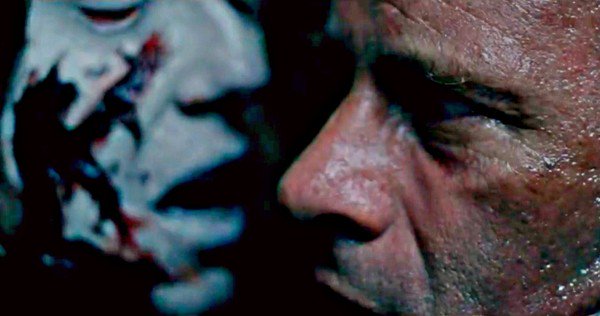
Netflix and King – 1922

1922

Netflix appear to be getting into the Stephen King business in a big way.

With their film of Gerald’s Game dropping this week and looking as kinky, creepy and gnarly as King’s book, the channel has now released a trailer for 1922, based on a novella taken from his 2010 collection, Full Dark, No Stars.

Starring the always watchable Thomas Jane as a farmer who manipulates his son into murdering his wfe, the Netflix film looks like it will fully embrace the ghastly goings-on as Jane’s wife (played by the equally watchable Molly Parker) comes back to torment him along with a plague of rats.

With the success of IT and these two new productions from Netflix, it’s good to see a rash of King adaptations that might just help us to forget 2017 was the year Sony made a trainwreck from The Dark Tower.

1922 arrives on Netflix on October 20.

Who Watches The Watchmen… Again?

drmanhattan

The news today that HBO have ordered a pilot for a new series of Watchmen, based on the comic book and graphic novel by Alan Moore and Dave Gibbons, comes with a whole bunch of raised eyebrows.

The first question to be asked is whether or not the world needs another adaptation (if indeed that’s what this will be, rather than a continuation or expansion) of the material so soon after Zack Snyder’s somewhat underrated 2009 film (flawed but definitely with its heart in the right place and with a rather elegant solution to the climax)?

The second question concerns the creative in charge of this new iteration. Damon Lindelof arrives with a whole lot of baggage, not all of it boding well. While his show The Leftovers has garnered many fans and a great deal of acclaim, he was also partly responsible for the complete mess that was Lost and also for large chunks of the script for Ridley Scott’s Prometheus, which was chock full of irritating characters doing and saying stupid things. In other words, a complete mess. Again.

So the thought of Lindelof taking the comic book that Alan Moore describes as “inherently unfilmable” definitely comes with caveats. We can only hope to get a show from The Leftovers Lindelof, rather than the Prometheus Lindelof.

Allowing that this baby is going ahead regardless of (or in spite of) its creators’ blessings (Moore has been in dispute over creative ownership of Watchmen for decades), a TV show could certainly allow the concept some breathing room, possibly giving time to the Tales of The Black Freighter comic-within-a-comic that was exised from Snyder’s film. It could also, if we’re really lucky, look at the nature of storytelling in a fresh way from the approach taken in the comic and adapt that for the filmic medium.

I’ll certainly be watching this one as it progresses.


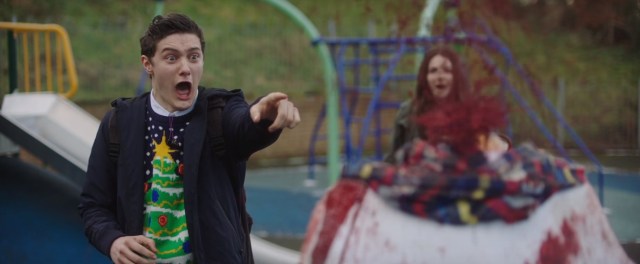
Anna and the Apocalypse – The Scottish Teenage Zombie High School Musical We’ve Been Waiting For…?

anna

If the above description of forthcoming movie, Anna and the Apocalypse (a Scottish, teenage zombie, high school musical for those who can’t remember anything above the header photo), doesn’t grab your attention as much as it does mine, then you’re probably reading the wrong blog. Oh, it’s also set at Christmas, but at this time I can’t confirm the involvement of either Tim Burton or Shane Black.

The film is directed by John McPhail, and stars Ella Hunt, Mark Benton, Paul Kaye and includes up-and-comers Malcolm Cumming, Sarah Swire, Christopher Leveaux, Ben Wiggins and Marli Siu.

Beyond its screening at this week’s Fantastic Fest in Austin, release details seem a little sketchy, but frankly the sooner this apocalypse is released upon the world the better.

What Year Is This? – The Triumph of Twin Peaks

tp finale 1

CAUTION: SPOILERS

Sunday night’s double dose of episodes finally (?) brought David Lynch’s magnum opus to an end. Of sorts.

But anyone expecting a cosy, happy denouement wrapped up in a neat bow for the residents of Washington State’s most bizarre town (and beyond, with these eighteen episodes) has either never paid attention to the auteur’s work or is going to have to try to take comfort from events in previous installments because Lynch was determined to go out with a take-no-prisoners bang of the bleakest kind.

Episode 17 gave us a more conventional climax (or as conventional as anything can be with Lynch), seeing many of the characters driving the narrative coming together (in the Sheriff’s office of Twin Peaks, naturally) and the evil spirit of Bob finally (perhaps, we’ll come back to that) laid to rest. But Cooper says “Now there are some things that will change…” and seemingly the first thing to do so (after a conversation with David Bowie, now played by a steaming teapot, of course) is that Cooper attempts to go back in time and save Laura Palmer before her terrible final night. But is he successful? The infinity loop image made in the steam produced by David Bowie’s teapot (and isn’t that a hell of a sentence to type) suggests otherwise.

Lynch still has another fifty minutes to go and he doesn’t waste a second of them as he makes even more sweeping changes, launching Cooper and Diane into an alternate time/world where they have adopted different personas (Richard and Linda) and where Laura Palmer – in the persona of Carrie –  is now living in Odessa, Texas, and still apparently in a world of trouble, with a dead body in her apartment. So perhaps Cooper’s plan to save Laura did work…

Cooper persuades Carrie to travel with him to Twin Peaks, and much of the episode is taken up by their largely silent journey, and its here that Lynch begins to ratchet up the tension. Along the way, Lynch drops in hints and portents that things are not as they should be (the white horse which appeared in Sarah Palmer’s visions, character names which harken back to clues spread out over the past twenty five years).

Arriving at the old Palmer house, both Cooper and Laura slowly come to the realisation that evil is eternal in a deliciously directed and acted scene, leaving us with an ending both shocking and horrifying, and one for which we may never receive answers. Will the evil which has haunted Twin Peaks play out again and again? Will the fight for Laura’s soul ever end? Does this speak to wider questions of evil’s ever-present existence in the world (theirs or ours)? Will Cooper and Laura ever free themselves from wherever they are now, or have those characters ceased to exist? Would this set off a whole new set of mysteries were the show ever to return (though I guess that last question answers itself, but still…)?

“The past dictates the future,” Cooper intones, during the penultimate episode, further suggesting an endless cycle of events, in which our characters appear to be trapped.

How often are we given drama that truly challenges us, that manages to leave us with a resolution which makes perfect sense yet leaves us with more questions than we started with? How often are we given eighteen hours of drama only to be left screaming for more?

Lynch has given us the show he wanted to make back in 1990, except now he deals with a network (Showtime, and plaudits to them) which understands that in order for this to happen the artist must be allowed to unfurl the story at his own pace, in his own way: each week has given viewers a unique and thoroughly new experience, from romance to comedy to outright existentialism and finally, returning to horror, where it all began.

Art exists to challenge and provoke, to make us view the world from other perspectives, and Lynch and his team have done this for eighteen hours. The return to Twin Peaks has been more than any of us could have oped for,  in this viewer’s eyes it is a triumph which will enthrall, amuse, terrify, frustrate, mystify and even make you cry. It is one of the most astonishing pieces of TV ever.

And we shouldn’t expect answers from Lynch anytime soon. However, in the 2004 book Nightmares in Red, White and Blue: The Evolution of the American Horror Film, by Joseph Maddrey, Lynch says:

“Being in darkness and confusion is interesting to me. But behind it you can rise out of that and see things the way the really are. That there is some sort of truth to the whole thing, if you could just get to that point where you could see it, and live it, and feel it … I think it is a long, long, way off. In the meantime there’s suffering and darkness and confusion and absurdities, and it’s people kind of going in circles. It’s fantastic. It’s like a strange carnival: it’s a lot of fun, but it’s a lot of pain.”

That would seem to be a statement which not only fits with his entire body of work, but also feels quite specific to this last season of Twin Peaks.

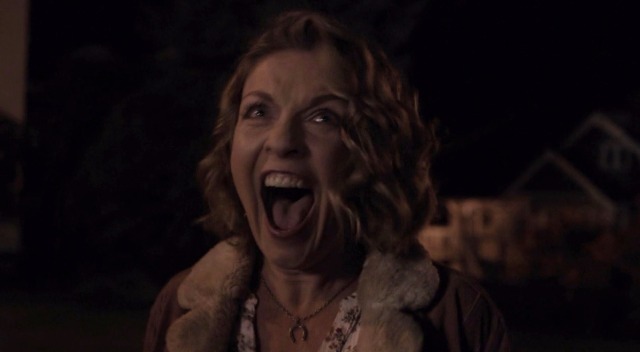
Cooper/Richard’s chilling final line and Laura/Carrie’s final, blood-curdling scream will resonate with you for days after, as in its final seconds Twin Peaks returns to the horror which has run through its icy veins from the show’s first moments of discovering a teenage body wrapped in plastic on a lonely beach.

“She’s dead… wrapped in plastic,” said Pete Martell on discovering Laura’s body back in 1990, and perhaps she always will be.

This Mummy Should Have Stayed Buried…

the mummy

In 2014 Universal released Dracula Untold and bravely announced it would be the first of a Marvel Cinematic Universe-style reboot of their classic stable of monster characters. Despite a reasonable return at the box office, this toothless retread received a decidedly lukewarm reception and it seemed the studio’s monsterverse was stillborn.

Jump ahead a few years and Universal announce another stab at The Mummy, which will herald in the first (or rather, the first yet again) of its Dark Universe films (now playing down Dracula Untold’s connection and seemingly forgetting poor old Luke Evans’ Transylvanian Count in the process).

This latest catalogue of Egyptian shenanigans has more in common with the previous trio of movies headlined by Brendan Fraser (The Mummy, The Mummy Returns and The Mummy: Tomb of the Dragon God) than the 1932 original starring Boris Karloff (or that film’s four successors). This means we’re in for another round of big budget, high adventure rather than anything remotely horrifying.

Tom Cruise is dull and woefully miscast, in a role that might have worked better with someone more adept at comedy (I kept thinking of Bruce Campbell), as a none-too-bright treasure hunter (read: thief) who inadvertently revives an evil Egyptian Princess with a plan to find a human host for the god, Set. The Princess has her eyes on Tom (presumably for the way he looks, because his character is rather irritating), and once Set moves in they’ll… I don’t know, take over the world, or yada yada, blah blah. It’s entirely possible I may have zoned out for a moment or two and missed some of the finer details.

This kickstarts a lot of big action set pieces, some dire attempts at comedy (including a huge and completely inappropriate swipe from John Landis’ seminal An American Werewolf in London), a lot of running around and away from dull CGI, and not one sequence that manages to be creepy or horrifying. Rather unfortunate for a would-be horror franchise, I’d say.

Russell Crowe shows up in an attempt to be the glue which holds together the Dark Universe but settles instead for chewing huge chunks of scenery and (presumably unintentionally) hilariously descending into a Mary Poppins/Dick Van Dyke Cockernee accent when his Doctor Henry Jekyll begins to play Hyde and seek. #sorrynorsorry

Sofia Boutella, as Princess Ahmunet/The Mummy, tries hard to do something with her role, managing to reveal shades of vulnerability through the bandages, through sheer force of will rather than anything the script gives her. It’s a shame the writers, producers and director didn’t trust the actress with more to do.

It’s astonishing and sad that Warner Bros/DC and now Universal have looked at the Marvel movies and learned nothing whatsoever from their success. When will studios understand that trying to shoehorn a shared universe into one movie is a bad idea!?

The film feels like nothing more than a checklist designed by a committee who wanted to tick off as many boxes as possible for Tom Cruise fans, giving them the kind of action they’ve grown used to from the Mission: Impossible series. Sadly this committee have seemingly never actually watched, or at least understood, a horror movie (and certainly none of the studio’s original films from the 1930s and 1940s), because bolting together a Tom Cruise action movie and a horror movie with no horror is most definitely a failed experiment that would have Doctor Frankenstein hanging his head in shame.

Finally and lethally, The Mummy is boring, it isn’t scary and the Dark Universe it tries so desperately to unwrap is dead on arrival.

The Defenders: Better Together (And Shorter)

defenders

After the double-stumble of the generally entertaining but stuttering Luke Cage and the thoroughly tone-deaf and lazy feeling disaster of Iron Fist, the Netflix/Marvel universe was on decidedly shaky footing. It was beginning to seem like the growing promise of Daredevil and Jessica Jones had been blown in two seasons of stretched-out superheroics, so I’m happy to say that The Defenders puts our heroes firmly back on track.

Marvel’s anti-team alternative to The Avengers began in the pages of Marvel Feature # 1, in 1971, before gaining its own long-running title the following year. The reluctant, non-team initially consisted of Doctor Strange, the Sub-Mariner and The Hulk, but soon expanded to include a rotating cast of heroes. Although both Daredevil and Luke Cage tagged along for a while, they were never core members.

Netflix’s The Defenders takes this group in name only, instead bringing together the casts of their previous shows: Daredevil, Jessica Jones, Luke Cage and Iron Fist. Also brought along for the ride are returning supporting characters and villains.

The first big plus point here is the big bad, none other than Sigourney Weaver. Weaver is quite obviously having fun with the role, clearly relishing her many arch lines of dialogue, but the character is given some essential moments of vulnerability too, leaving us with another in the stable of successful Marvel TV villains (after Vincent D’Onofrio’s Wilson Fisk/The Kingpin and David Tennant’s Killgrave).

But you came here for the heroes, and of course The Defenders delivers these in spades. Daredevil continues to be tortured (though with some welcome added humour), Jessica Jones is all-snark and snap, Luke Cage is the picture of wounded noblility and Iron Fist is, well, he’s actually rather likeable here. Consider that a triumph after being an asshole for thirteen episodes of his own show. In fact, for long-term comic book fans, seeing long-term buddies Luke Cage and Danny Rand spar off against each other will be a genuine buzz.

Which brings us to another big score for The Defenders. I’ve said repeatedly that the fixed thirteen episode season format has harmed the Netflix/Marvel shows (even the good ones), taking interesting stories and stretching them way beyond their shelf life. The Defenders is a relatively brisk eight episodes and boy, can we feel the difference!

The first two episodes take their time to get moving, somewhat pointlessly reintroducing the various characters and their supporting casts, but they soon begin to pick up speed and then the third episode is where everything comes together: narratively and literally.

Episode three is one of the best hours of Marvel TV to date, with a fast-paced, driving narrative, kick ass action sequences, snappy dialogue and great interaction between the leads. In fact there were one or two moments that had me punching the air in delight, definitely a first for Marvel TV.

From here the story moves deliberately and enjoyably, neatly pulling together a lot of threads which had been left dangling in other shows and at last we have a show which doesn’t feel like a chore to get through. Netflix/Marvel, please take note: eight episodes is the perfect format for these shows and unless you have an incredibly compelling reason otherwise, this should be your model!

There’s still the odd bit of clunkiness lurking around and overall I’m not sure there’s too much in the way of character development (except, surprisingly, something of a maturing for Danny Rand/Iron Fist), plus The Hand have proven to amongst the most ill-defined and ineffectual bad guys ever (after four whole seasons yet) but despite these failings, and in terms of watchability, Netflix/Marvel have definitely upped their game with The Defenders. Whatever failings the show has are more than compensated for by its brisk pace and fun antics. And there is a lot of fun to be had here.

With more seasons announced for all four main characters, plus a first run for Jon Bernthal’s Punisher, it’s clear the superhero train will keep on running on Netflix. Let’s hope they learn all the right lessons from this enjoyable Marvel team-up!

Netflix’s Empty El Chapo

chapo

I’m a sucker for a good series about crime lords, gang wars and drug trafficking, so when I saw articles suggesting Netflix’s El Chapo might be their answer to The Wire, I was practically drooling.

Sadly, anyone seeing this show as being anywhere near as dramatically satisfying as David Simon’s classic tale of the narcotics trade in Baltimore is probably getting high on their own supply.

Co-produced by Netflix and Univision, El Chapo recounts the beginnings of Joaquín “El Chapo” Guzmán in 1985, when he was a low-level member of the Guadalajara cartel until his rise to power and his last fall.

Guzmán’s story makes for rich dramatic picking. From 2009 to 2011 Forbes magazine ranked him as one of the most powerful people in the world, and named him the 10th richest man in Mexico in 2011, with a net worth of roughly US$1 billion. The magazine also called him the “biggest drug lord of all time.” The U.S. federal government considered him “the most ruthless, dangerous, and feared man on the planet.” So, you know, there’s quite a lot to get your teeth into here.

There is a wealth of great material: the cartels and their various squabbles, the involvement of the U.S. government, the rise of a lowly government official to a position of power involved with the underworld, a crusading reporter, appearances by Pablo Escobar (and the show’s first real dropped ball by not getting Narco’s Wagner Moura to reprise his role, robbing us of the chance to experience a Narcos shared universe) and of course, the trials and tribulations of Guzmán himself.

The show looks fine, though it doesn’t exactly drip with period feel, but what really lets down the whole endeavour is the writing.

As I’m typing this review I’m six episodes into the nine episode run and I know literally nothing more about Joaquín “El Chapo” Guzmán than I did at the beginning of the first episode. Oh sure, the events are all in place and there are sporadic bursts of excitement and bloodshed, but Guzmán remains nothing more than a cypher, as in fact does every single character in the show. Guzmán stays unknowable, as does his wife, his girlfriends, friends, allies, rivals and enemies.

No one speaks about their emotions, nothing happens that’s character-driven, and no one has an inner life of any kind. The scripts must have been a doddle to write, because never before have I come across a high-profile show of this kind where the dialogue is 100% functional. Characters tell us where they’re going, what they’re going to do, who they’re going to kill or pay off… but never why.

The nearest we get to an actual living, breathing character is Humberto Busto as conniving politician Conrado Higuera Sol “Don Sol”, but even he never gets a single line of dialogue that does anything but gloss over the veneer of his actions.

As a result El Chapo is purely functional, moving people you’re not allowed to care for, empathise with or hate from one situation to another. The events themselves are interesting, but ultimately it’s a hollow shell. As drama it’s a complete disaster and an object lesson in how not to write compelling, nourishing TV because there’s no meat on El Chapo’s bones.

UPDATE: the final two episodes deal with Guzmán’s internment and also give us a glimpse of his formative years (and therefore something passing for character development). It’s a mystery why this material wasn’t spread out as flashbacks throughout the season, as it would have added sorely-needed depth.

So finally, the show ends with some improvement but sadly it was a case of too little, too late for me.

Godzilla R.I.P. – Sayonara, Haruo Nakajima

Haruo-Nakajima

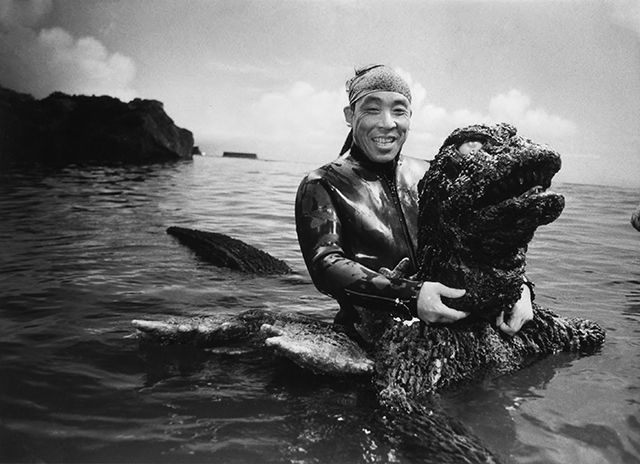
Haruo Nakajima (中島 春雄 Nakajima Haruo) the Japanese suitmation actor best known for portraying Godzilla from the original movie in 1954 through twelve consecuctive films until Godzilla vs Gigan in 1972, has passed away at the age of 88.

Alongside his physically demanding role as the King of the Monsters, he performed suitmation roles as monsters in an unprecedented number of kaiju eiga including Rodan (1956), Mogera in The Mysterians (1957), Varan the Unbelievable (1958), Mothra (1960), Matango (1963), Baragon in Frankenstein Conquers the World (1965), Gaira in War of the Gargantuas (1966) and even the Eighth Wonder of the World himself, King Kong in King Kong Escapes (1967). He would also work with Godzilla special effects genius Eiji Tsuburaya in a number of the popular Ultraman TV series.

Nakajima’s impressive career began at the age of 33 in Sword for Hire (1952), before taking on roles in The Woman Who Touched the Legs (1952), Eagle of the Pacific (1953) and Farewell Rabaul (1954) – both for original Godzilla director Ishirō Honda, which led directly to his casting as the beloved monster – and then Seven Samurai for Akira Kurosawa in 1954.

After his retirement from film and television work in 1973, Nakajima would become a popular and much loved figure at many Godzilla conventions around the world.

In the short film The Man Who Was Godzilla, Nakajima said: “In the end the Godzilla I played remains on film forever. It remains in people’s memory, and for that I feel really grateful.”

Rest in peace, Godzilla.

Guardians vs The Hoff in Disco Inferno!

hoff gotg

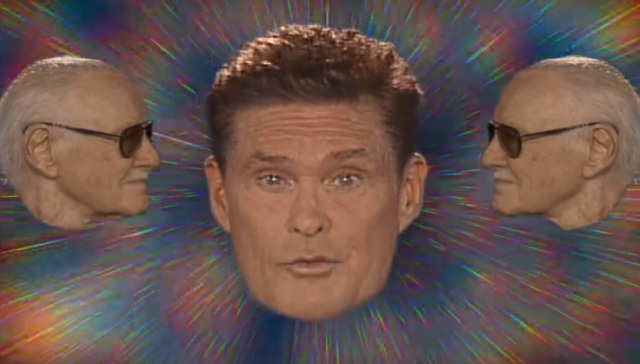
Not much to say about this one except here’s the music video released to promote the digital release of Guardians of the Galaxy Vol. 2, which will probably be the greatest thing you’ll see today.

Starring the entire Guardians Vol 2 crew (and director James Gunn himself) in 70s kitchen foil disco suits along with The Hoff, there’s even room for the obligatory Stan Lee cameo.

Guardians of the Galaxy Vol 2 lands on digital on August 8th and Blu-ray & 4K on August 22nd.

Enjoy, and remember: We Are Groot!