

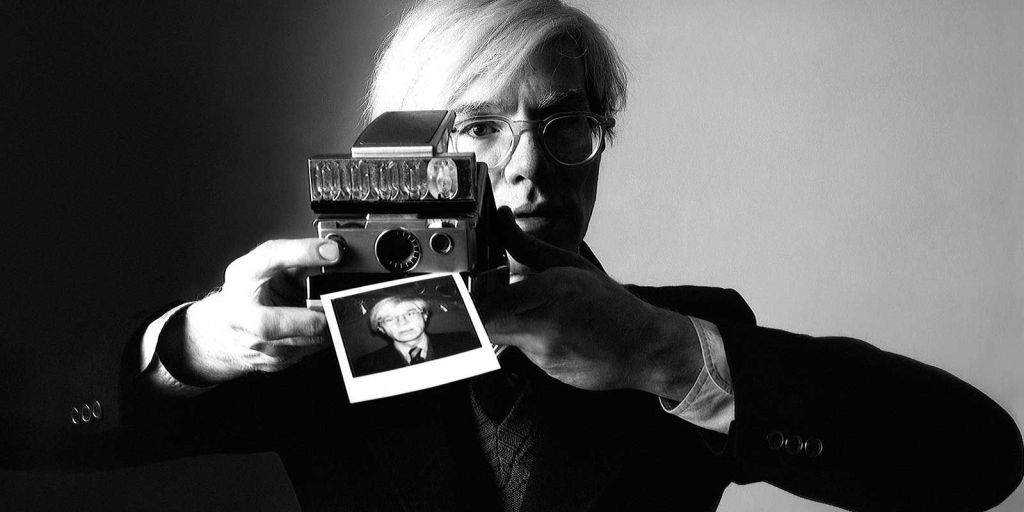
Famous For More Than 15 Minutes – The Andy Warhol Diaries on Netflix

Never having read The Andy Warhol Diaries, edited by long-time friend and writer Pat Hackett (she wrote Bad and the twin terrors of Flesh for Frankenstein and Blood For Dracula for Warhol), I wasn’t entirely sure what to expect from the six episode Netflix documentary series of the same name.

Through it’s exhaustive (but never exhausting) running time however, what I really didn’t expect was just how touching it would be, and how much of the inner life of one of the art world’s greatest iconoclasts would be revealed.

Produced by Ryan Murphy (American Horror/Crime Story), the series visualises the daily phone conversations Warhol would have with Hackett, which she would then transcribe. Of course the very nature of both Warhol’s and Hackett’s choices concerning what to talk about, and importantly what not to, mean this necessarily remains a subjective telling of the artist’s life, but it’s probably as close to what could be deemed ‘the true story’ as we’re ever likely to get.

The beauty of the series is that it tells us as much about Warhol’s feelings as it does the well-known historical narrative, revealing not only the history of some of the most important works of art of all time, but also the complicated and really rather sweet man behind the carefully-constructed persona.

Often wryly amusing and frequently heartbreaking in his simple need to be loved (by his partners, as much as by the public), Warhol’s sexuality and spirituality are shown to be major proponents of what is too often disregarded as impersonal work.

Using few contemporary interviews, but focusing instead on reminiscences by friends (including not only his inner circle, but also the likes of John Waters and Debbie Harry) and on Warhol’s own words (recreated by AI), Murphy and writer/director Andrew Rossi have crafted what can easily be regarded as the definitive, and most unexpectedly emotional, biography of the man who remains for many the very face of Pop Art.

Highly recommended.
The Long And Winding Road – Get Back Review


Hours after finishing The Beatles: Get Back and I’m still buzzing from it. Ignore anyone who says it’s too long because, well… they’re wrong.

As the Fab Four attempt to overcome their reluctance to perform in front of an audience, Get Back was conceived as an early multimedia production; while they put together the songs for a new album, a camera crew films for a documentary which will culminate in their first live show in two years. They have roughly three weeks to create the songs and rehearse them for the show, then Ringo Starr is off to make a movie. So, no pressure. Well, except the internal band pressures that were growing steadily between them all.

With TikTok and short attention span visuals becoming the norm, the documentary series is that much-treasured beast: long form storytellng that demands, and repays, your investment. It simultaneously blows apart and reinforces received wisdom of this period in the band’s history: in many ways they’re at their lowest ebb, musically and personally, yet gradually the sheer joy of creating and playing together is rediscovered. Challenging long-held views of this period – not least of which by the band themselves – even during the pain, there was much laughter and spontaneous creativity, it’s revelatory to see.

Director Peter Jackson luxuriates in the utterly necessary time it takes to show the ebb and flow of this journey, anything less would diminish it. Yes, the first part is slow, and frequently agonizing, as this was the nadir, and the band’s (first) break-up is both understandable and desperately sad. These aren’t people who hate each other, they’ve just lost the means to communicate. The Beatles, icons, shown in the most fractured, human light.

And even the slower first part contains moments of astonishingly casual beauty: at one point, waiting for a seemingly perpetually late John Lennon to arrive, and with the band on the verge of desperation to bring in new material, engineer Glyn Johns is hanging out at the piano with Paul McCartney and asks him: “So, have you written any new stuff (over the weekend)?”
“Well, I’ve got this…” McCartney replies and starts noodling out the beginning of arguably one of the most well-known songs in musical history – The Long And Winding Road. It’s a moment of sublime exhilaration, one which moved me to tears.

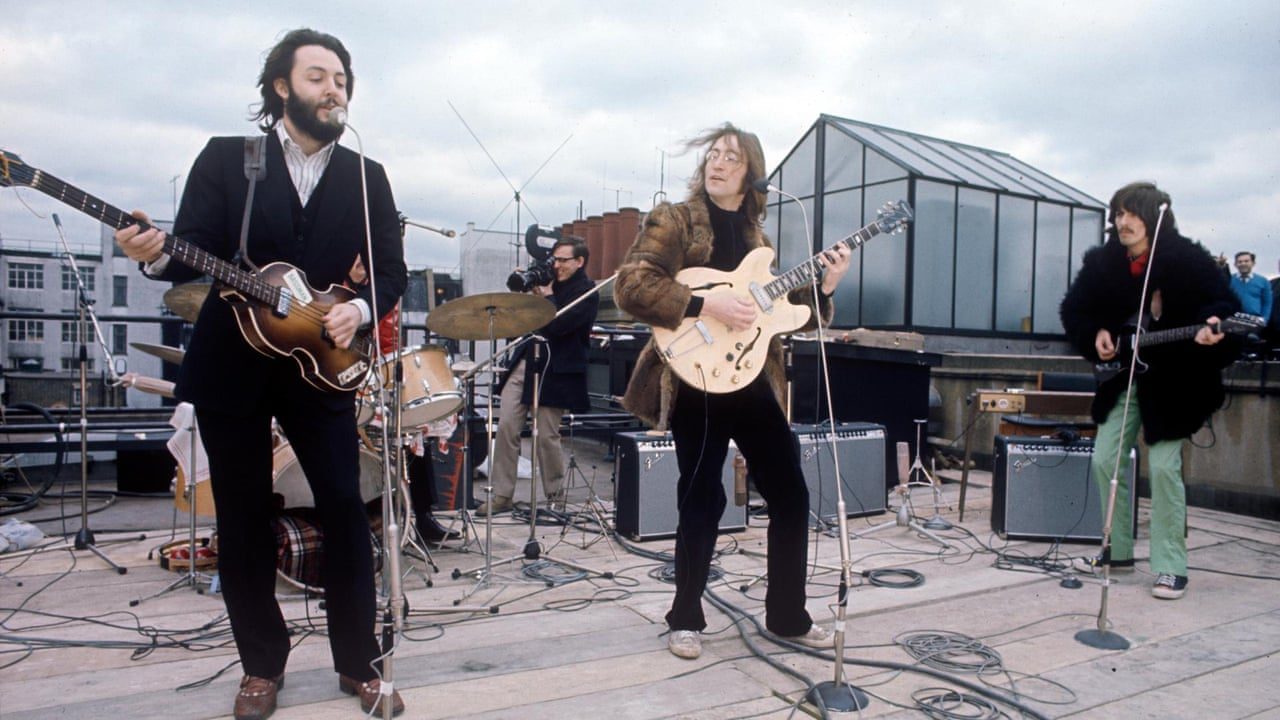
Through moments of tedium, the humour, love and alchemy created by these four uniquely talented individuals reemerge. The pay-off, both in the creation of these sessions and for the viewer, is of course the legendary concert high above London, on the roof of the Apple Records building.

Seeing a band, who just days before had barely finished a single satisfactory version of a song, suddenly rip through nine miraculously together takes of five songs, looking at the sheer enjoyment on their faces, becomes an extended sequence of pure euphoria. It’s also heartbreaking to know this would be the last time they would perform in public, with music that was urgent and fresh, and far along the creative path that saw them explode the horizons of popular music.

The reconstruction and restoration of the footage, directed by Michael Lindsay-Hogg for the 1970 film, Let It Be, is breathtaking, making vast improvements to the original quite dour look, and filling in some necessary gaps in the narrative as creatively – if not always unobtrusively – as possible.

The Beatles: Get Back is a phenomenal look at the creative process and a privileged glimpse into cultural history that feels like it was filmed yesterday.

– Dave King