Brothers In Arms – Captain America: Civil War

captain-america-civil-war-trailers-clips*Spoiler-free review*

Acting as a direct sequel to both Captain America: The Winter Soldier and Avengers: Age of Ultron, Marvel Studio’s thirteenth film finds the characters in an intriguing position. It’s been impossible for the world not to notice the massive and terrible destruction which follows in the wake of their epic efforts to battle the forces of evil, and now a United Nations-dictated act is to be put into place which will regulate the actions of the heroes. Two factions form, each divided by strongly held beliefs over the ramifications of this act and battle lines are quickly drawn.

To say more would take away from the delicious pleasures of the film’s twisting narrative, but it’s enough to say that engaged viewers will be surprised and shocked at the way events unfold, in a sometimes brutal manner.

When this film was announced there were many who feared it would lose its identity as the third Captain America film and would instead act as a de facto Avengers 2.5, since it features not only many of the regular Marvel characters but also sees the introduction of two major new players to the Marvel Cinematic Universe – the Black Panther and of course, the Amazing Spider-Man.

I’m happy to report this is most definitely not the case. Remarkably, Marvel (headed up here by the increasingly effective team of Anthony and Joe Russo) have instead given us what could just be seen as their crowning achievement to date. Civil War is most definitely a Captain America film, but it’s also an Iron Man film and it’s also a film that’s very much part of Marvel’s incredible long-form narrative that’s been unfolding since 2008.

The regular Marvel actors seem to have simply glided into their roles here, everyone is just effortlessly great (though special mention must be made to Downey Jr, who brings a sharper edge to Tony Stark’s usual surface glib) and they are now joined by two characters set to be major players in Marvel’s future story arcs. Chadwick Boseman, as Black Panther, and Tom Holland as Spider-Man are completely kick-ass. Both hit the ground running and while some might fear that this film would be overcrowded with the introduction of two such important roles, instead they not only compliment the action but leave you wanting more.

As a major Spider-Man geek from an early age, I’ve been particularly on edge to see how Marvel will handle the character, having finally secured the rights for the first time in decades (which is a whole, twisting narrative of its own). Happily, every scene with both Spidey and Peter Parker (and there are a surprising amount of them) left me grinning from ear to ear, this is the wisecracking teenage hero I’ve been waiting to see for a long time. It’s a joy to see my beloved character back where he belongs, most definitely in good hands.

It’s impossible not to bring in Marvel’s Distinguished Competition at this point, since we’re still reeling from the recent cinematic onslaught from the rival comic company, DC (and Warner’s) Batman v Superman: Dawn of Justice.

While it might seem somewhat odd to compare and contrast between two films in a review, there are inevitable comparisons to be made here. In fact, since the two companies elected to open their films so closely to each other, practically taking part in their own cross-company head to head battle, it might be fair to say the comparisons are invited.

Batman v Superman is almost laughably dark, every second heaps on Sturm und Drang to a point where we become numb to it as viewers. The film struggles to tell even one coherent, human story over its bloated 151 minutes, neither Clark Kent nor Bruce Wayne receive any kind of identifiable arc, and the defining, climatic moment of the titular clash of their superheroic alter egos comes about because their mothers share the same name! The rest of the many characters fight to find their place in the narrative, and often seem dropped in purely to service plot mechanics (particularly in regards to the newer Justice League members, who felt embarrassingly like corporate product placement, no more intrinsic to the story than an appearance by a Samsung phone).

Civil War, both by comparison and in its own right, feels nuanced and balanced, an even more impressive feat when you realise how effortlessly it looks after so many characters and so many story threads. Improving over the somewhat top heavy Age of Ultron, the Russos (along with screenwriters Christopher Markus and Stephen McFeely and, one imagines, the Marvel Studios brain trust) find a place and purpose for all of the characters on their chessboard, and do so with drama, humour and focus, never losing sight of what makes these characters work.

This really is first class storytelling and filmmaking that won’t alienate newcomers to the series but will massively reward regular followers of the ongoing Marvel narrative. It’s a remarkable feat of engineering, servicing the needs of the franchise in a way that feels mature and thoughtful, raising questions of heroism against vigilantism, and of the consequences of their actions.

In short, Civil War is a film that’s about something. Even a month or so later, I’m still not certain what the hell Zack Snyder and his crew were trying to say with their film, apart from announcing that we’re in for a slew of DC films. Where the DC film felt utterly mechanical, Marvel’s latest feels perfectly organic.

That the Russos achieve all this and still manage to tell a compelling human drama as the latest chapter of a story that has been unfolding for eight years not only delights but also bodes well for the filmmaking brothers handling the massive two-part Avengers – Infinity War which this latest phase of Marvel films is heading towards.

Captain America: Civil War is a lot of fun, it’s exciting, thoughtful and ambitious filmmaking, and further proof that Marvel’s careful landscaping is a bold adventure in brave, long-form narrative storytelling in a way we’ve never seen before. Civil War’s multiple threads work because we’ve been given time to come to know and care about the characters. From its pulse quickening opening to its heart-breaking denouement, Civil War is a triumph for the company.

Strap in and hold on tight, Marvel scores again!

*And in the spirit of Marvel’s post-credit scenes, I should warn you that you might want to stay until the very end…
The Magnificent Seven ride again. Again.


While there are many valid arguments to be made as to whether John Sturges’ 1960 classic Western, The Magnificent Seven needed to be remade, the fact is it has been and the just released trailer is a lot of fun.

Antoine Fuqua has lined up a very intriguing cast including Denzel Washington, Chris Pratt, Ethan Hawke, Vincent D’Onofrio and Lee Byung-hun, and this first teaser rests heavily on the not-inconsiderable charms of Washington and Pratt (let’s hope the director finds the Pratt sweet spot as seen in Guardians of the Galaxy, rather than the unlikeable clod of Jurassic World).

Sturges’ original was itself a remake of course, taking inspiration from Akira Kurosawa’s 1954 slice of genius, The Seven Samurai, so it’s difficult to get too hot under the collar at this tale getting yet another run around the corral. It remains to be seen if this latest version can also inspire a science-fiction remake (cf. 1980’s Battle Beyond the Stars), just to make the whole cycle nicely reductive.

Meanwhile you can look forward to this iteration hitting both IMAX and non-IMAX screens (i.e. normal screens) in September.

AMC IMAX Captain America: Civil War poster exclusives!

IMAX montage

I have quite a few regular readers based in the USA, so if you’re planning to see the beginning of Marvel Studios’ Phase Three, Captain America: Civil War in IMAX, then AMC Theatres have given an added incentive to get you to spend your hard-earned dollars with them.

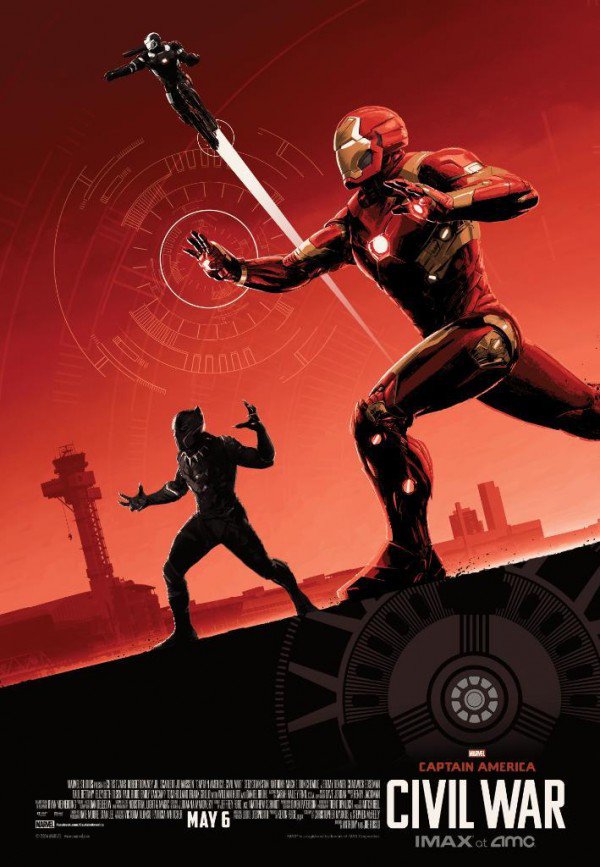
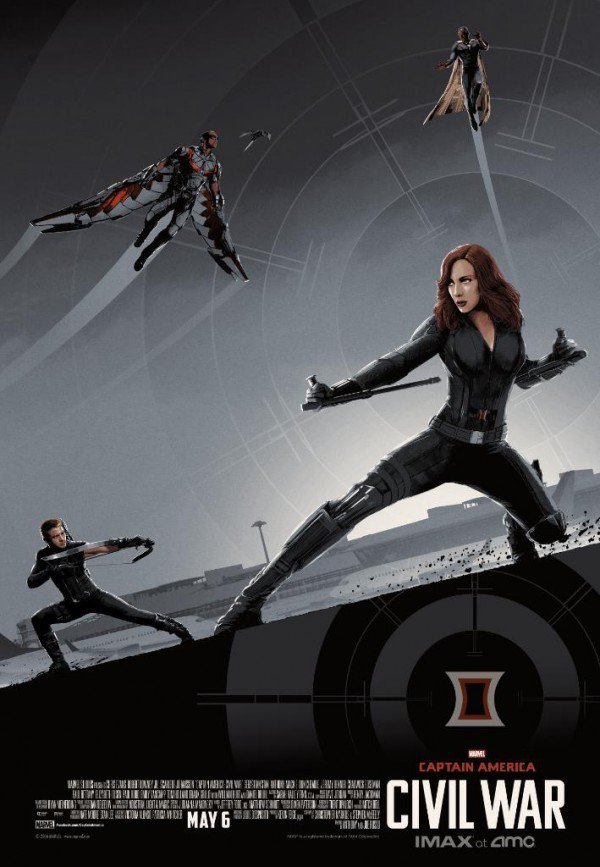
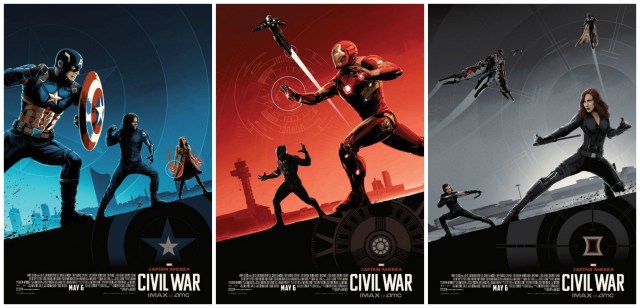
Much like the recent Star Wars The Force Awakens posters, AMC are offering a selection of three posters featuring art by Matt Ferguson dropped at their IMAX locations, one each across three consecutive Sundays, starting on May 8th.

Advance word of mouth is through the roof on this third Captain America film, which not only launches a new phase of Marvel films (leading up to the two part, Avengers: Infinity War) but also sees the long awaited introduction of The Amazing Spider-Man to the Marvel Cinematic Universe in the shape of British actor, Tom Holland. These posters are sure to become much sought after.

No word yet as to whether these AMC exclusives will be available elsewhere, so keep your eyes peeled.

Captain-America-Civil-War-IMAX-1-600x867

Captain-America-Civil-War-IMAX-2-600x867

Captain-America-Civil-War-IMAX-3-600x867

Did that come out already!? Slow West

SlowWest

Some films hit you fast, like a bullet, while others come on like a shot of good whisky, warming you slowly, leaving a burning, smoky aftertaste. Such is the way with Slow West from 2015, starring Michael Fassbender, Kodi Smit-McPhee and Ben Mendelsohn.

This deliberately paced, slow burn film, the quirky debut feature from director John Mclean (who writes and directs here), takes us on an episodic journey from a beach in Scotland across the plains of the American frontier, with events leading to an inevitable and brutal confrontation across a wheat field with a widescreen sky.

Smit-McPhee plays a young pilgrim travelling westward to find his lost love, and finds himself in the company of loner Fassbender, their fates more intertwined than the boy suspects, a fact made more complicated as their journey sees them both learning to rely on and like each other.

Beautifully shot by Robbie Ryan, Slow West has the feel of some of the great films from the 1970s, a hint of Terrence Malick’s poetry with a dose of the hopelessness of Monte Hellman’s Ride in The Whirlwind. We know for certain things are not going to end well for one or more of these characters, particularly when Ben Mendelshon’s greasy, fur coat bundled bounty hunter arrives to complicate things further.

Fassbender is exceptional value as always, bringing a likeable unpredictability to his role and Smit-McPhee and Mendelsohn compliment both him and each other well. The excellent casting goes a long way to filling out the slight characters.

A feeling of melancholy runs through the film like a deep cut, as the journey winds through forests and plains, leading to the final explosion of violence and a bittersweet climax where love may not bring the results everyone wants, but takes some to the place they need to be.

Mclean’s film was overshadowed by the release of both The Revenant and The Hateful Eight in 2015, but stands easily besides these other Westerns as a more elegiac and engaging entry into the genre.

Fear and Loathing in New England – The Witch

the witch

There are many remarkable things about Robert Eggers’ horror film The Witch, but foremost of all is that the story takes place in a time and environment that none of us have ever experienced and yet succeeds in telling an utterly recognizable and terrifyingly human story that hits home all too familiarly.

Set in 17th century New England, we follow the plight of William and his family, excommunicated from their village as a result of the father’s “prideful conceit”, who establish a small, austere farmstead on the edge of a dark, foreboding wood.

When the newborn baby disappears while in the charge of the eldest daughter, events are set in motion that will challenge their faith, their family and their lives.

What follows is a tale that we’ve perhaps seen before, but told with such care for period authenticity and with such sheer intensity that it’s hard not to consider this one of the finest horror films made for a long time.

Eggers infuses each sequence, each shot even, with a deep sense of dread, making this incredibly intense viewing, barely giving us room to breathe for 93 minutes. The film gnaws at you, building to a disturbing, emotional climax I doubt will soon be forgotten. This is great filmmaking that doesn’t fall back on easy scares, there are no black cats jumping out unnecessarily or doors banging to create false scares.

What we get instead is a horrifying view of a family falling apart, of building resentments and suspicions laid bare, mixed in with deeply unhealthy doses of religious fervour (or belief, your mileage will vary), with little hope for a happy ending. Christian love and compassion are quickly subsumed by religious hysteria, and Christian fear of sin and the dark forces of evil.

However one of the film’s strengths is also one of its weaknesses. We’re quickly left in no doubt that there is a genuine supernatural presence at work here, but because the story is so compelling and the performances are so strong I couldn’t help but feel that perhaps a little more uncertainty might have made this an even richer, more layered experience. The final shots in particular left me wanting a less is more approach, but the film is at least strong in its convictions.

Talking of performances, Ralph Ineson (as William, the father) and Anya Taylor-Joy (as eldest daughter, Thomasin) are both achingly brilliant here. Ineson is always a pleasure to watch, and really runs with the bit between his teeth at this co-leading role, making you both admire and curse his character’s pride. Newcomer Taylor-Joy is equally magnificent, giving her character’s eventual fate a great deal of poignancy. In fact the entire cast, including the also always great Kate Dickie, is uniformly excellent. Of course, because this is a horror film these are the kinds of wonderful acting roles that will never be remembered at Oscar time, see Essie Davis in The Babadook as another example of this blind absurdity, but should in fact be showered with awards.

The Witch also features one of the best cinematic goat performances ever, and I guarantee Black Phillip is creepy as all get out.

Superb acting, directing, editing, lighting and production design (which shouldn’t surprise, as Eggers is a former production designer) are topped off by Mark Korven’s score, sombre and jittery and guaranteed to get under your skin. The Witch comes layered in authenticity, everything’s beautifully textured – you can practically feel the mud and smell the forest, and the smart use of period dialogue underlines this.

When the majority of horror films involve impossibly beautiful young people with interchangeable (barely) characters, it’s remarkable that Eggers has given us a film that not only speaks to human experiences and failings, and not only makes those experiences recognisable and relatable, but also manages to resonate and unnerve.

The Witch is that rare film that makes me want to immediately watch it again. Next time though, I’ll do it with the lights on.


Little Godzilla, Big Reveal

banpresto

What might the clearest, or at least the fullest, reveal of Toho’s newest iteration of the King of the Monsters, Godzilla, has come from a toy advert.

Banpresto’s Big Sofubi figure advertises the “13.4” vinyl beauty by Yuji Sakai (the foremost Big G sculptor in the world), to be released in late July, and sold as a lottery prize in “bookstores, hobby shops, game centers, movie theaters, etc” as translated from the original press release by noted Godzilla and Japanese film expert, August Ragone.

As is usually the case, many Godzilla fans are up in arms about the new design, despite only being given a few glimpses of the creature in the just released trailer for Toho’s new film, which will be released in Japan on July 29th.

Shin Gojira (which can be read as New, True or God Godzilla) will be titled Godzilla Resurgence in the west, is directed by Neon Genesis Evangelion creator, Hideaki Anno and  Shinji Higuchi, who directed the special effects for the wonderful 1990s Gamera series (and if you haven’t seen those films yet, you should drop whatever you’re doing and seek them out at once).

It’s not yet clear whether we’ll get to see this film released theatrically outside of Japan, as its status in regards to the recent Legendary/Warner Bros film (about to spin off into its own Godzilla-verse, courtesy of both the forthcoming Kong: Skull Island and indeed Godzilla 2) is yet to be clarified, but I doubt lawyers and licensing deals will stop the Big Guy trampling his way here eventually, if only on home video.

Source: August Ragone

Yakuza With Heart – The Outlaw Gangster VIP Collection

outlaw gangster poster

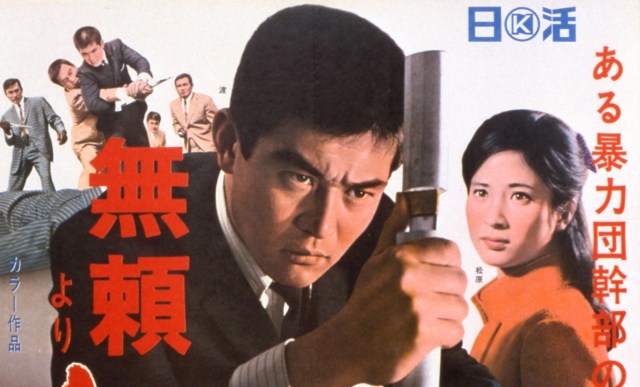
Based on the novel by ex-gangster Goro Fujita, the five films encompassing the Outlaw Gangster VIP series were released in Japan by the Nikkatsu studio, between 1968 and 1969 (a quite breathtaking run) and both prefigured and influenced the more widely known later series of yakuza films, Kinji Fukasaku’s Battles Without Honour and Humanity (also released as a sumptuous box set by Arrow).

What sets these films apart from the Battles Without Honour series is the sharp focus on Goro (here renamed Fujikawa) as a central character, and the women and men who orbit his story, friends, lovers and enemies, which gives this series a stronger emotional core. In fact, the series is definitely elevated by the way it looks at the roles of the women, and gives them frequent and effective voices, as they are caught up in the dramas instigated by the men around them.

Simple and direct storytelling holds sway throughout the films, but that isn’t to say there isn’t cinematic beauty to be found here – a knife fight taking place on scaffolding, another beneath the pillars of a bridge, a back alley fight as dust billows the wind up around the protagonists, a knife duel through a city river as teenage girls unknowingly play a game of netball close by, an assassination in a rain drenched children’s playground, Goro taking on an entire gambler’s den under the ballad accompanied open titles or a climactic fight in a paint factory,  this series is consistently visually inventive.

vlcsnap-00003

A sequence in Outlaw Gangster No 2 highlights both this inventiveness and deeper heart, cutting back and forth between Goro in Yokahama and his friend Yumeko back in Hirosaki City on her death bed – a cigarette snuffed out, the lights of a train station switched off – is heart rending in its simplicity, as Goro’s boss has previously destroyed the telegram informing  Guro of her illness and the assassin carries out his business unaware of her passing.

Towering above all this is Tetsuya Watari as Goro. The actor strides through this saga like an acting behemoth, moving effortlessly between gangster cool and gangster cold, all the while battling the raging conflicts within him caused by the demands of honour and duty, compromise and betrayal and those of a man in love. It’s a constant throughout the series, a fearless, heartfelt performance that deserves attention and respect.

The series is also filled with great performances from the likes of Chieko Matsubara (as Goro’s love, Yukiko) and fans of the Female Prisoner Scorpion and series can catch Meiko Kaji in the second film, as an appetiser for Arrow’s box set release of those films later in 2016. Of course, Kaji also stars in Arrow’s excellent release of the two Lady Snowblood films.

outlaw gangster set

Colour looks great throughout the films, mostly drenched in the greys and browns of yakuza offices and backrooms, but vibrant when splashed with the hot neons of nightclubs and bars, the dazzling snow of the countryside or the lush green of a mountainside cemetery.

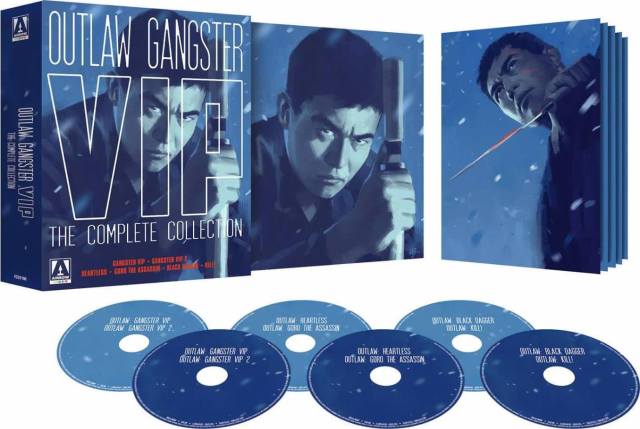
Extras include commentaries, visual essays and trailers and it’s worth noting that this set is the first legal release of the films in the west, and so features the first official, English subtitled editions.

Arrow’s box set is a treat from beginning to end, a saga of love and honour, brutal violence and sweeping romance, that becomes almost soap opera like in its twists and turns. Sit down with the first film and you’ll find yourself emerging a day later, like the yakuza version of a Netflix show. And while certain tropes do reappear from film to film, the sheer power of Watari’s broiling intensity and the elegantly direct but layered storytelling will carry you through the few low points.

Limited to only 3000 copies, you should pick this up as soon as possible, this is a VIP presentation of a VIP series of films that will stay with you long after your first viewing.

Coming soon – The Neon Demon


Anything that comes from the delightfully obtuse mind of Nicolas Winding Refn is worth your time and his latest film, The Neon Demon, looks to be no different.

The plot describes the story of Jesse, an aspiring model, who moves to Los Angeles, where her vitality and youth are devoured by a group of beauty-obsessed women who will take any means to get what she has.

With an intriguing cast including Elle Fanning, Alessandro Nivola, Keanu Reeves, Christina Hendricks, Abbey Lee and Jena Malone, the first trailer promises hints of Black Swan and Suspiria with its wild and beautiful colour stylings.

The Neon Demon will premiere at the 2016 Cannes Film Festival and go on general release later this year. This writer for one will happily trample across an artfully arranged room full of models to see it.

Source: Fandango

Did that come out already!? Love & Mercy

love and mercy

Welcome to the first in a continuing series of reviews that will look back on films that might have slipped under the radar or simply have passed you by. With the continuing dominance of streaming sites such as Netflix and Amazon Video, it’s become easier to catch up with unsung gems or avoid outright stinkers.

First up is Love & Mercy, otherwise known as ‘that film about Brian Wilson’…

Thankfully eschewing the standard biopic format (see Ray, Walk The Line, blah, blah, blah…), Bill Pohlad’s 2014 film, Love & Mercy, instead positions itself more as a character study of the achingly productive and terrifyingly troubled Brian Wilson and attempts a more interior look at the man rather than simply recreating the edited highlights of his career.

Structurally cutting back and forth between the late 1960s and the 1980s, Wilson is portrayed by both Paul Dano and John Cusack and the film is at its most vibrant when showing Wilson’s incredible gift for songwriting and production, but also submits us to the grueling and heartbreaking treatment meted out to Wilson by both his father and the Svengali-like Dr Eugene Landry (who held Wilson in a horrific grip for years), and draws a clear line between the two figures. Dano and Cusack couldn’t be further apart in their more usual screen personas but here they blend seamlessly to give a fully fleshed out a layered portrayal of this fragile genius.

Performances are strong throughout, with the two leads backed by Elizabeth Banks and Paul Giamatti, but the film’s finest qualities are that it leaves you appreciating Wilson even more, allowing us a glimpse into the beautiful, spiritual sounds he heard so clearly in his head, and thankful that he has been able to find some measure of peace and renewed creativity in his later years.

Finally, Love and Mercy leaves you wanting more and leaves you with the desire to go out and discover (or rediscover) Wilson’s astonishing body of work, and that in itself makes the film both worthwhile and successful.

Image © Lionsgate

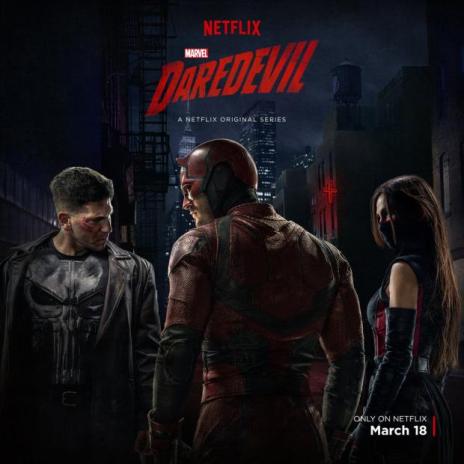
Daredevil Season Two: Crime & Punishment

daredevil-season-2-punisher-skull-costume-elektra

In every way a superior production to its predecessor, the makers of Daredevil season two have definitely looked back on their previous failings (and taken note of what made Jessica Jones so successful) and given this run a far stronger sense of identity. This feels more confident and assured in every way, and while I maintain the thirteen episode seasons do more harm than good (every one of these shows has run two or three episodes too long, and would benefit from a healthier HBO/Game of Thrones style pruning down to ten episodes), the shows are improving constantly.

After a stunning first episode, this season takes a measured approach with a strong arc across the next three instalments. The next two arcs fold into each other neatly too, but if there’s one strong criticism to be made it’s that the three core threads don’t finally come together in the way you really hope. There’s a big scene missing, one which you’ll definitely want to see, that actually occurs in a somewhat diminished form. To say more would involve spoilers, but you’ll feel it when it comes (or rather, when it doesn’t come).

Still, there are surprises along the way, especially for those paying attention to Daredevil’s fellow Netflix shows, and several threads are set in place for forthcoming series. One particular thread promises what could be the first strong link to the eventual team up show, The Defenders (bringing together Daredevil, Jessica Jones, Luke Cage and Iron Fist).

Jon Bernthal finally gives us a definitive Punisher, not just a cold hard killer but a fractured, broken soul who frequently seems more like a wounded animal than a man, and his nuanced performance breathes life to a character attempted several times onscreen before but never quite humanising him the way Bernthal does here. This take on The Punisher is genuinely interesting and definitely leaves you wanting to see more. You hear that, Netflix…?

The same applies to Matt Murdoch’s long lost love, Elektra. Last seen several years back portrayed by Jennifer Garner in a generally rotten movie, Élodie Yung essays her as playful and dangerous, the bad girl that Murdoch can’t let go of. Fans of the comic book iteration are certain to be pleased with this take on the beloved character.

Charlie Cox has settled well into the dual role of Murdoch/Daredevil, making him a multi-faceted and far from perfect man, both in and out of costume. Deborah Ann Woll and Elden Henson (as Matt’s partners, Karen Page and Foggy Nelson – far less of a douche here, I’m glad to say) share greater chemistry with the lead and have more to do this time round. Thankfully, what they do feels, for the most part, more intrinsically a part of the main narrative rather than leaving them with the wheel spinning duties of the first season.

This season’s big bad is far less earthbound than the strong, focused villainy of Vincent D’Onofrio’s Wilson Fisk/The Kingpin, and opens a very definite door for things to progress into the wider Marvel Universe, but its slightly diffuse nature does leave a less satisfying whole. However, this deficiency is more than made up for by the introduction of The Punisher and Elektra. Both characters are given room to breathe and shine throughout the twisting, turning narrative.

The superheroics are much more fun this time, Daredevil’s costumes and weaponry receive significant upgrades along the way, and we’re finally presented with full on action from the billy-club that became his trademark weapon of choice in the comics (and we’re even treated to the wonderful sight of Hornhead using it to swing across a rooftop or two).

And for those who felt season one kept things too street level, this second season takes turns into far weirder and darker corners of the Marvel Universe. Action is plentiful, constantly exciting (sometimes even breathtaking) and frequently positively brutal, and with more than one costumed character running around this feels even closer to the source material than ever.

Themes of love and responsibility weave through the action alongside questions of what exactly makes a hero, and though the TV budget does occasionally show (the climactic battle feels just a little lacking) this is a wilder, generally more satisfying ride and finishes with multiple endings which, while a little predictable, also leave the door wide open for more adventures with The Devil of Hell’s Kitchen!

With the Netflix shows improving each time, and with early word suggesting that Luke Cage will hit with torn-from-the-headlines subject matter of police brutality against the black community (giving the kind of emotional heft that accompanied Jessica Jones), I’ll be glued to my sofa (again) come September 30th!