
No Bullshit, The Greasy Strangler Is Warped But Brilliant!

the-greasy-strangler

Big Ronnie is a grinning grotesquerie who wanders around in a series of bizarre outfits, frequently with his nasty-looking penis dangling halfway to his knees. When he isn’t dragging his poor emotionally stunted, needy son, Big Brayden, around to present a tourist trap disco tour of derelict locations, Ronnie covers himself in layers of thick grease and violently murders anyone who crosses him. Or even poor, hapless souls who don’t cross him. Ronnie is not exactly picky when it comes to strangulation.

Underneath the unwashed y-fronts, (literally) in your face fart gags and dangling penises there beats a curiously affecting, albeit diseased, heart. The murder plot eventually gives way to the story of a father and son finding each other after years of emotional abuse, before tailing off into a deep end of… well, actually, I’m not sure exactly what happens at the end. There might be a point to it all, but I’m not sure it actually matters if there isn’t. At the very least you’re sure to come away from a viewing wanting to sing and dance to the line “Hootie Tootie, Disco Cutie!” As cinematic gifts go, that’s pretty decent.

There’s nothing remotely real-world about Jim Hoskings’ film, and yet it’s not difficult to imagine these characters existing on the fringe of society, too out there even to be featured on reality TV shows and living on the same block as Pink Flamingos’ Egg Man and Connie & Raymond Marbles, or even Blue Velvet’s Frank Booth in a lighter mood.

Imagine a film that has some of the oddball feel of a Napoleon Dynamite sequel as made by John Waters, featuring a synth-driven electro pop score, with lashings of sex, gore and greasy murders, and you’ll get a good feel for what you’re letting yourself in for. There are moments of such out and out goofiness (Ronnie’s spotlit, street disco solo – all wild hair, gangly legs and dangly cock – being a prime example) that you can’t help but warm to the strangeness being thrust in your face.

The three leads (Michael St. Michaels, Sky Elobar, Elizabeth De Razzo) give fearlessly physical, genuinely off-kilter performances, putting Jared Leto’s pissant Suicide Squad Joker to shame with what they dare to do for the camera, and still manage to make their characters just a little more than cartoons, giving their three way love triangle more heart than the constant anal fingering might suggest. But don’t worry if you think it’s all going to get too touchy-feely… there’ll soon be a phone sex scene of junior furiously fiddling with his infintesimal cock while mouthing sweet nothings to his amore, such as “Imagine me stroking your clitoris with a pink feather and then you cradle my sack.” This might be the film that the acronym WTF was made for.

The Greasy Strangler is, as they say, not a film for everyone. But it is one of the more bizarre and frequently laugh out loud funny films I’ve seen in a long time. It also has the best and most disgusting prosthetic movie wang since Mark Wahlberg’s Boogie Nights dazzler. So you know you’re getting bang for your buck.

https://www.youtube.com/watch?v=VPl1vcb4hao

Beauty And The Beastly – The Neon Demon

the-neon-demon-elle-fanning

The Neon Demon, directed by Nicolas Winding Refn, sees Elle Fanning’s Jesse, a beautiful small-town girl, moving to L.A. and finding herself negotiating a path through the city’s fashion scene, surrounded by a glistening wave of beauty that’s powered by sinister vampiric urges, full of envy, obsession, necrophilia and cannibalism.

The film moves at a cool, dreamlike, almost ambient pace, a world away from the ADHD editing of a Michael Bay film, but it never meanders, its sense of menace and ugliness building assuredly.

Then Refn goes for a bravura ending, one that has seen people throwing their arms up in disgust and outrage. It’s certainly horrific , but it’s also a thoroughly logical and quite perfect summation, and definitely not easy to forget (should you feel the need to). It’s also very funny, in its own darkly twisted way.

Fanning is terrific in this. It would have been very easy (read: lazy) to have her portray the innocent swept up in terrible events beyond her control, but both actress and filmmakers are too smart for that. The actress plays Jesse with a knowing air – she’s new to the world, certainly, but she’s not unaware of her currency in that world. She knows she’s pretty and that she can make money from being pretty, as her character says.

There are a number of power plays twisting through the cast of characters, and Jesse is at the centre of them: everyone wants something from her and she knows this. But she also wants something from them. Refn plays with the audience’s expectations as to whether or not we should like her as a central character, and it’s this ambiguity that gives her edge.

Both she and the rest of the cast work hard to give their characters inner life, it’s one of Refn’s traits, allowing his actors to fill in the blanks through… well, acting, and it works well here. Jena Malone, Christina Hendricks, Alessandro Nivola, Abbey Lee, Bella Heathcote and Karl Glusman populate Jesse’s orbit, and it’s a fine cast (not to use that word in such a distasteful way as Nivola’s character uses it in the film), while Keanu Reeves is almost unrecognisable as the truly awful dirtbag who runs the motel in which Jesse resides.

Refn is defiantly channelling Dario Argento’s Suspiria here, not just with the colour splashed visuals, but with the whispery, insistent voices of dark magics seeping through every frame, and Cliff Martinez’s electronica beats pulsing and throbbing out a suitably modernist proxy for Goblin. Of course, The Neon Demon doesn’t take place in rain-drenched Munich and Freiburg but in sun-splashed Los Angeles, nevertheless these two films would make a superbly sympathetic double bill. Or, given how brutal each film is, should that be a superbly unsympathetic double bill!?

This would be the perfect point to sing the praises of Natasha Braier’s cinematography, Erin Benach’s costumes and Elliott Hostetter’s production design, all of which are gorgeous. Refn and his collaborators don’t skimp when it comes to replicating the high end excesses of the fashion world, I doubt we’ll be treated to a more visually ravishing movie this year.

This is a filmmaker is in absolute control of his craft, telling the story he wants to tell with precision but, like all great art, forcing the viewer to bring in their own experiences and prejudices. His visual style is all glamour and gloss but the emotions lurk beneath this gossamer thin veneer, they’re dirty and ugly and perfectly 21st century human. The concerns of the film are narcissism fuelled by the fashion industry and by our wider culture, and a hard stare at the way we both deify and objectify young women.

But he’s also asking us to look at the transient nature of beauty in the moment, in the right moment, and at our own need to possess and, ultimately, to kill that beauty. The Neon Demon’s world is one of mixed messages, as is ours.

Is Refn telling us anything we don’t already know or suspect about the fashion industry, or indeed about ourselves? No, but the journey he takes us on while reinforcing that knowledge or those opinions is what makes the story worth telling.

Anyone who thinks The Neon Demon is a case of style over substance has simply been seduced by the sheen. Which is rather one of the points here, no? But those who think this are perhaps cut from the same cloth as those who walked away from Only God Forgives disappointed that it wasn’t two hours of Ryan Gosling wading through fist fights.

Refn’s film has proved to be divisive and that seems justifiable. Like the world it thoroughly eviscerates, you’ll either be utterly repulsed by it or enthralled by it. And that’s great, it’s what I love about both Refn and this movie. This is still fiercely the same director who made the Pusher trilogy, his views of the underbelly still as savage, his filmmaking style still as uncompromising. Refn is punk: vulgar, energetic and wonderful.

You don’t like it!? The Neon Demon seems to be saying almost as a clarion call for Refn’s entire body of work. Okay, great, it’s not for you. Fuck off. If you do, then allow its plumped, sumptuously lipsticked lips to lock onto yours and you’ll be rewarded with the smell of the fetid, rotting meat breath that follows. For me, it’s one of my favourite films of 2016.

The Neon Demon ain’t pretty, but it sure is beautiful.


I Am Not A Serial Killer… but someone is!

I Am Not A Serial Killer

One of the great pleasures of watching so many movies, as I do, is the joy of discovering a film about which you have little or no previous knowledge, which connects with you on different levels and immediately creates a bond which you know will likely be enriched by multiple viewings through the years.

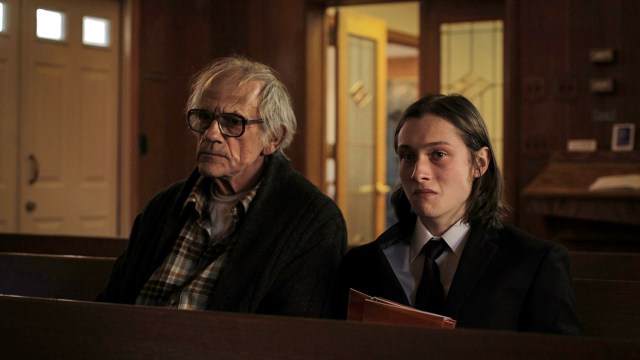
Such is the case with low budget indie chiller, I Am Not A Serial Killer. Based on a 2009 novel by Dan Wells, this adaptation stars Max Records (the child star of Where The Wild Things Are), Laura Fraser (from Breaking Bad) and Christopher Lloyd, and is directed by Billy O’Brien – whose work I’m completely unfamiliar with, but will be paying close attention to from here on.

The plot follows teenager and diagnosed sociopath, John Wayne Cleaver (and what a fabulous name that is for a movie with this title), who must hunt down a grisly serial killer in his hometown.

As well as his diagnosis, Cleaver has to contend with being the son of the local mortuary practitioner in this small community, a fact which makes his life more difficult given the usual high school social conventions. How the young man deals with these conventions is just one of the wonderful detours the film takes while gradually building on the nightmare of the central story.

O’Brien’s Irish produced film (despite being filmed in Minnesota) moves at a deliberate pace and worms its way into your affections primarily down to the central performances by Records and Lloyd.

Records’ character in other, less certain hands could be impossible to like or empathise with, but writing, direction and performance blend to give a layered, textured lead role. Likewise, Lloyd is just a delight to watch, giving us a perfectly measured character who will lead you on quite an emotional journey. It’s a million miles (or more) from his signature role as Doc Brown, in the Back to the Future films.

If some of my descriptions seem a little obtuse, it’s because I have no intention of spoiling the wonderfully warped trip this film takes you on, it’s lo-fi naturalistic style doing its best not to prepare you for the moments (and there are quite a few) when the rug is pulled from under you.

This wry, darkly humourous blend of several different genres, including black comedy, teen coming of age drama, dark crime movie and, well, something else, is ghoulish and nightmarish, but also thoughtful and insightful, full of offbeat observations and several “did that just happen?” moments.

O’Brien’s slyly titled film is, as I’ve mentioned previously, one I’m already looking forward to revisiting, which is a rare enough quality these days . Next time I might skip eating beforehand, though…

Suicide Squad – the two hour trailer.

suicide_squad_background2_0

So let’s just get this out of the way: Suicide Squad is a complete and utter mess, it’s one of the most incoherently put together mainstream Hollywood movies I’ve ever seen, to the point where it feels like a two hour long trailer.

The plot is simple: Superman is dead (at least until the last ten minutes of next year’s first Justice League movie) and U.S. government official Amanda Waller comes up with a plan to put together a team of super powered bad guys in order to combat other super powered bad guys. One of the team, The Enchantress, a witch with a bad complexion but great dance moves (of which, more later) goes rogue, throws a lot of big, glowing CGI around and threatens to take over the world. Fighting ensues.

The real life plot of Suicide Squad goes (allegedly) like this: Warner Bros/DC hire screenwriter/director David Ayer (Training Day/Fury) to make what they touted as one of their “filmmaker driven” projects. During production of Suicide Squad, Zack Snyder’s Batman Vs Superman: Dawn of Justice is released to okay-ish box office but – and here lies what I suspect is the nub of this film’s (many) problems – a quite horrendous critical backlash.

Snyder’s film was labelled too dark, too grim, just too damn serious! According to industry scuttlebutt reshoots are ordered for Suicide Squad but, say the producers, these were always scheduled and weren’t done as a result of the drubbing meted out to BvS. Then things get stickier with the rumours that the film was given over to the guys who had cut Suicide Squad’s well received trailer with the remit to lighten it up, put in more jokes, make it more like… well, a Marvel film. Further, it seems that two cuts of the film existed – Ayer’s darker version and the trailer guys’ lighter version – and the decision was made to merge them.

What amount of this is true? Does it matter anyway? The short answer of course, is that none of the above would be of any interest if Suicide Squad had turned out well. But, dear reader, Suicide Squad has not turned out well.

The film seems to have been edited with a pair of blunt scissors by someone wearing thick rubber gloves and a blindfold. Cara Delevingne’s badder bad guy The Enchantress stands around doing interpretive dance moves to create… I still don’t know, a magic something or other… for almost an hour of the movie. Really, her character stands in one spot and (literally and figuratively) doesn’t go anywhere. Characters are introduced multiple times – the squad are introduced solidly three times in three concurrent scenes – each character is even given text-filled info screens and then we’re still treated to more introductory sequences!

After being introduced three times to Will Smith’s sharpshooter, Deadshot, we’re then given a scene, where Smith is handed a whole bunch of guns to fire at targets, that exists only to show us that… um, Deadshot is a sharpshooter. Just in case you didn’t get that before. Or before. Or before that.

In case all of this isn’t enough to hammer your poor eyes and brain into submission as to who you’re watching, each character gets a needle drop so painfully obvious it’s a wonder they don’t flash the lyrics onscreen just to really underline things. Incidentally, there should be an immediate ban on any filmmaker using The Rolling Stones’ Sympathy for the Devil to underscore how bad a character is, punishable by exile to making wedding videos for the rest of their life.

Whole sequences are muddily constructed (wait… the Enchantress did what to her human alter ego in order to escape her earthly shell!? Who shot down that helicopter!?). One scene has Margot Robbie’s Harley Quinn wave goodbye to the rest of her team as she heads up into a building in a glass elevator, get into a fight with some monsters between floors and then enjoy a supposed comedy beat as the elevator doors open high up in the building to reveal the team she’d left behind on the ground floor pointing guns at her. But there’s no explanation for how they got there before her – it’s not even laughed off as a joke, it’s just left hanging in a kind of awkward “Huh? What?” moment. This is a first day at film school level mistake, it’s unforgivable in a multi-million dollar movie.

Whatever went on in the background of the making of this film we may never know, but you should be under no misapprehension that this film has somehow completely lost its way in post-production. The astonishing thing is that no one at DC or Warner Bros was able to see what a mess had been created and that the film was allowed to go into release in this sorry state.

suicide-squad

What makes all this so frustrating is that somewhere in this mess is a good film. It’s really enjoyable that so much weird shit is just thrown headlong into the film without anyone batting an eyelid… superhumans, witches, swords possessed by souls, mutated crocodile men! This is fun stuff and the film’s willingness to embrace it all almost gives it a strong worldview.

Also, whatever the producers paid Will Smith and Margot Robbie, it wasn’t enough. These two scorch their way across the screen with good, old fashioned star power and share great chemistry. Both actors were obviously having a blast with their parts and it shows. Really, I could have watched two hours of just these two and they almost (…almost) make the film worth the price of admission.

Viola Davis and Jai Courtney (as Amanda Waller and villain Captain Boomerang, respectively) do their best with the little they’re given, and Jay Hernandez (as fire summoner, El Diablo) impresses by bringing heart to an underwritten role. Joel Kinnerman (as Rick Flagg), unfortunately, feels miscast and Karen Fukuhara (as swordswoman, Katana) is a blank slate who drifts in and out of the film leaving no impression whatsoever.

In case you were wondering, Heath Ledger’s legacy remains completely undamaged by Jared Leto’s Joker, the character is horrible (and not in the way he should be) – blindingly obvious, grating, underwritten (again) and pretty redundant for much of the film. It’s such a gross misunderstanding of the character that I am now really hoping he doesn’t show up in Ben Affleck’s forthcoming Batman movie.

And despite all this I found myself enjoying parts of the film. But I’d no sooner find myself hitting a groove than some bizarre edit or incomprehensible plot point would just pull me out of the story all over again. It’s a shame. These actors are really working hard to give life to their characters and so much is undone by terrible committee meddling.

Warner Bros and DC really need to get their act together. This is a two for two strike out which shows a basic lack of faith in the core material and a lack of cohesive direction for their shared universe. Instead we’re left with an aimless mess that simply makes a lot of noise for two hours.

So, that was Suicide Squad the trailer. Now when do we get the movie…?

* With thanks to Ante Lundberg for the review title.

A Tale of Two Zombies – Dr Butcher M.D. & Zombie Holocaust

doctor-butcher-720x405

In the mad, bad days of 1970s exploitation films, anything would go when it came to filmmakers and distributors attempting to satiate the cinematic hunger of the crowds who would flock to the grimy theatres and fleapits of 42nd Street. Any craze or genre would be leapt upon with gusto and promotion of the films would go to any length to pull in the punters – even completely changing one film to make something different!

Such was the case with Zombie Holocaust, directed by Marino Girolami, the father of Eurocult icon Enzo G. Castellari. Girolami’s film, made in 1980 under the pseudonym Frank Martin, is a budget-challenged take on Lucio Fulci’s classic Zombi 2/Zombie Flesh Eaters, which also throws in elements from the then popular cannibal genre, including such films as Ruggero Deodato’s Cannibal Holocaust.

The paper thin plot involves an unfortunate Manhattan morgue which is having problems keeping its occupants’ limbs from going missing. It quickly transpires that these dirty deeds are being carried out by a member of a Caribbean cannibal cult. A nurse, a health department chief, an annoying reporter and her friend soon go on a foolish excursion to a group of New Guinean islands where they run afoul of a mad doctor, zombies, cannibal natives and Jack the Ripper (that last one might not be true). Much spilling of blood and guts ensues.

While the film wins plus points for its canny combination of two popular genres, it’s something of a mess. It distinctly lacks the verve of Fulci and Deodato’s works, and it definitely won’t win any anthropological awards for its depiction of indigenous people, but taken in the right light (and possibly aided by rigorous consumption of alcohol) Girolami’s film is nothing if not entertaining.

Zombie Holocaust did the rounds in Europe and finally landed in the U.S., on the desk of Terry Levene, who acquired it for his Aquarius Releasing distribution company, renaming it Doctor Butcher M.D. (Medical Deviate). In an attempt to make the film seem less Italian and more American, Levene took some footage from an unfinished film, Tales That Will Tear Your Heart Out (directed by and starring Roy Frumkes, who would go on to script films such as The Substitute and the cult horror comedy Street Trash) and slapped it on the opening reel.

The footage, featuring Frumkes himself rising from the grave and wandering around like a Friday night office worker at closing time, is unconnected to the rest of the movie (despite some flash cuts of Girolami’s zombies appearing for no good reason).

But these additions, along with some trimmings in the original film’s running time and some wild promotional stunts (including misrepresenting the film as a slasher movie and hiring a truck splattered with Doctor Butcher artwork which drove around Manhattan in the run up to the film’s release) made enough of a difference to ensure that this cut would become a runaway smash on 42nd Street and a staple of the VHS gorehound’s diet in the 1980s!

However, the Levene Doctor Butcher cut has remained difficult to see, but this has now been remedied as dedicated cult label Severin have given both films the kind of gold star presentation usually reserved for somewhat less trashy sensibilities by the likes of Criterion!

drbutchermdcovers

Zombie Holocaust and Doctor Butcher M.D. arrive as a two disc set, with both cuts having been fully restored with 2K scans using the original negative elements from the Aquarius Releasing vaults, alongside an almost insane amount of supplementary material. Severin give us an in-depth interview with Aquarius head honcho Terry Levene, who regales viewers with a history of the company’s successes via films such as Deep Throat and Make Them Die Slowly/Cannibal Ferox. We’re also given a guided tour of The Deuce, the area of New York around 42nd Street which once housed some of the most notorious grindhouse cinemas and sex emporiums. Our tour guides include the previously mentioned Roy Frumkes, and Severin have also included footage from Frumkes’ film which made up the beginning of the Doctor Butcher M.D. cut.

There are a gaggle of interviews with interested parties, including star Ian McCulloch, effects maestros Rosario Prestopino and Maurizio Trani, Doctor Butcher M.D. film editor Jim Markovic, Enzo G. Castellari (who discusses his father) and more, including theatrical trailers and, for the first lucky 5000 copies ordered directly from Severin, a wonderful Doctor Butcher M.D. vomit bag (I have one and it’s a tacky, wonderful delight). There are major Hollywood productions which haven’t been given this much love and attention to detail on home video.

 The film, indeed both versions of it, might be cheap and nasty fun, but Severin’s disc is first class all the way and will no doubt feature on many top disc lists for 2016. Take a number and get yourself comfortable, the Doctor will see you now…

Mighty Meiko – Arrow Video’s Female Prisoner Scorpion Collection

FCS-in-colorCR

The Japanese genre of Pinky Violence movies is stuffed to the padded bra full of sex, violence and bad girls, and towering over all of them is a quartet of films made (incredibly) between 1972 and 1973. The Female Prisoner Scorpion movies are delightfully lurid, containing lashings of not only the sleazy elements vital to enjoying Women In Prison movies (violence, torture, rape, shower scenes and lesbian sex) but also qualities that show the filmmakers attempting to create something far above the norm, as they are shot full of quite stunning, delirious imagery – particularly in my favourite of the series, Female Prisoner Scorpion: Jailhouse 41.

What sets them even higher above the competition, however, is the presence of the star of the films, Meiko Kaji. Actress and singer Kaji has appeared in around 100 films since the early 1970s, including the Stray Cat Rock and the Wandering Ginza Butterfly series and the two Lady Snowblood films (as well as making an appearance in the second Outlaw Gangster VIP film). Her screen persona is that of the lone outlaw, and this is perhaps never more sharply defined than as Nami Matsushima, wronged in the first film, Female Prisoner # 701: Scorpion, by her crooked police detective boyfriend and sent to prison after she attempts to murder him when he allows several drug dealers to gang rape her (buckle up, these films definitely aren’t for the squeamish).

Matsushima is allocated the prisoner number 701 and must fight to exist in a brutal prison run by corrupt, lecherous and sadistic male guards, as well as contend with the attentions of her fellow inmates.

Alongside Kaji, the first three films stand out as a result of the beautiful and often surreal work from director Shunya Ito (the fourth, Grudge Stable, is directed by by Yasuharu Hasebe). Ito worked at the grindhouse and tokusatsu farm, Toei Company, for most of his career and won a Directors Guild of Japan New Directors Citation for Female Prisoner # 701: Scorpion.

Opening the first film with a lovely piece of barbed commentary, the warden of the prison is awarded a commendation for his work in rehabilitating prisoners just as the sirens wail, announcing an escape attempt by prisoner 701, who takes time to explain to her fellow escapee that she’s bleeding profusely as a result of her period before beating a tracker dog to death with a log. 701 is then herself beaten brutally with a rifle butt by the guard who foils her escape.

701 is placed into a grim solitary confinement as she begins to recall the events that led her to this point, and it’s here that Ito’s direction begins to truly shine, with an expressionistic, dreamlike sequence showing Nami’s seduction and abuse by her slimy boyfriend. With shots through glass floors, vivid, comic book lighting and the motif of red used from Nami’s deflowering to her attempted revenge, this may be exploitation, but it’s avant-garde exploitation as seen through the eyes of an artist that transcends to become the very best the genre can offer. Orange Is The New Black this ain’t!

It would be all too easy for Nami/701 to become an unlikeable victim, but both the story and Kaji combine to give us instead a character who endures with a glowering, righteous anger and rises above these terrible events to finally become “Sasori” (Scorpion), an appellation for vengeance and a symbol of female resistance in a world dominated by untrustworthy men (as well as equally untrustworthy women). Virtually silent, absolutely unbreakable and hell bent on exacting revenge, it’s impossible to tear your eyes from the screen whenever she appears and she brings a simmering star quality to this extreme but thoughtful and inventive saga.

The films that follow, Female Prisoner Scorpion: Jailhouse 41, Female Prisoner Scorpion: Beast Stable and Female Prisoner Scorpion: # 701’s Grudge Song offer a wild cinematic experience. It’s little wonder Quentin Tarantino, that wonderful magpie of outré movies, would be a fan of them – enough so that he used Urami Bushi, the recurring theme song from the Female Prisoner series, sung by Meiko Kaji herself of course, for his film, Kill Bill Vol. 2.

Now Arrow Video, the most essential of home video companies (alongside Criterion) have released all four films in an exquisitely packaged and packed box set. As well as brand new 2K restorations of all four films in the series presented both on Blu-ray and DVD, the set contains a treasure trove of video interviews and essays (with the likes of Japanese cinema critics Jasper Sharp and Tom Mes) as well as appreciations by filmmakers including Kazuyoshi Kumakiri (Kichiku: Banquet of the Beasts) and Gareth Evans (The Raid). There are archival and new interviews with director Shunya Ito and assistant director Yutaka Kohira, a new interview with production designer Tadayuki Kuwana, theatrical trailers and more.

The 4000 copy limited edition (the films are likely to be released separately at a later date) also contains a beautiful hardback book on the series, with writing by Chuck Stephens, Chris D and Yoshiki Hayashi, as well as a reproduction double-sided fold out poster of two original theatrical posters. The whole package is illustrated by striking, newly commissioned artwork by Ian MacEwan.

female prisoner scorpion set
I’ve been in love with these films since first seeing them almost a decade ago and I really cannot recommend them enough. Now Arrow have done a remarkable job, making any previous releases redundant and hopefully exposing them to a wider audience. If I were to nitpick (and I will) I would say it’s a shame Arrow didn’t include the two films in the less widely regarded New Female Prisoner Scorpion series, made in 1976 and 1977. While not as vital they do have their charms and it seems like a missed opportunity. Of course this is only the kind of first world problem likely to worry completists, and perhaps it’s simply an opportunity for another box set.

Meiko Kaji is a powerhouse in Japanese genre cinema and this set really is a fine tribute to one of her signature roles. You might say that prisoner 701 has finally gotten the justice she deserves.